For years on General Hospital, Brick has mostly existed in the background as Sonny Corinthos’ trusted technology expert — the guy who could trace calls, crack encrypted systems, and quietly clean up dangerous messes. But after his latest appearance in Port Charles, the show seems to be revealing something much bigger: Brick has never been just a hacker. He comes from a far more dangerous life, and hints suggest that buried past may finally be resurfacing.
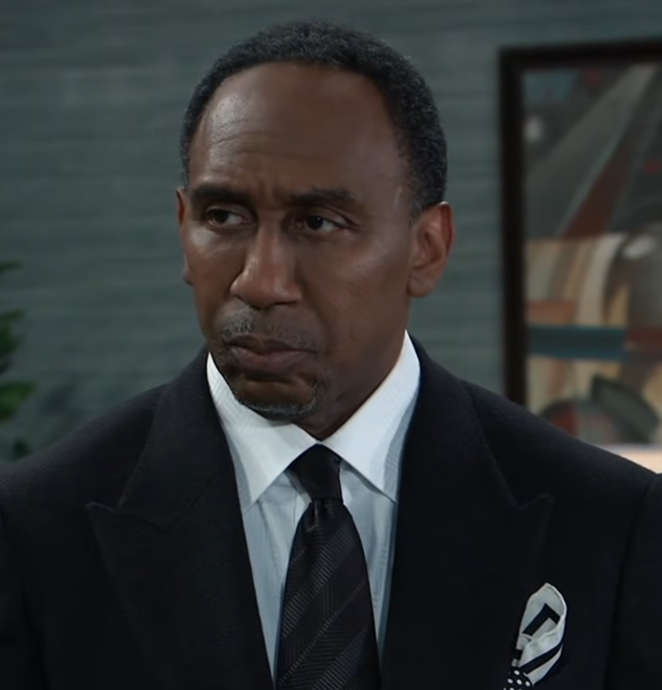
From the second Brick returns, something feels noticeably different. He doesn’t arrive with fanfare or dramatic explanations. Instead, he carries himself with the calm confidence of someone who has already faced situations far more terrifying than the current chaos in Port Charles. Rather than spelling out his history directly, the show allows Brick’s behavior to reveal the truth — and what viewers are seeing feels deeply unsettling.
Brick’s calm demeanor doesn’t come across as accidental or relaxed. It feels controlled, almost strategic. He speaks like a man trained to observe every detail, read every person in the room, and prepare for danger before anyone else notices it coming. In a town crowded with mob bosses, manipulators, and secret agents, Brick stands apart because he never feels the need to prove himself. He simply studies situations, which suggests experience in environments where one mistake could cost lives.
A short but meaningful mention of Los Angeles adds another layer of mystery to Brick’s story. The reference doesn’t feel random — it feels deliberate. The show subtly hints that whatever life Brick left behind in LA wasn’t simple, and more importantly, it may involve people who still remember exactly who he is. The city isn’t presented as a memory; it feels more like unfinished business.
The confirmation that Brick has intelligence-related experience changes the way fans view everything he has done in the past. Suddenly, his technical skills no longer seem like random talent or underground hacking tricks. Instead, they feel professional, disciplined, and connected to real covert operations. Brick doesn’t react to danger emotionally — he identifies patterns because he’s been trained to survive them.
This also explains why Brick’s warnings always feel so serious. He never overdramatizes threats or tries to frighten people unnecessarily. When he believes danger is real, he simply presents the facts. In Brick’s world, hesitation can get people hurt — or worse. That kind of confidence doesn’t come from instinct alone; it comes from experience.
His scenes with Carly Spencer make his personality even clearer. Brick never wastes time trying to comfort her with false reassurance or unnecessary emotion. Instead, he speaks to her with the precision of someone delivering a security briefing before a crisis. Every word feels practical, direct, and focused on survival rather than comfort.
Brick’s long-standing alliance with Sonny Corinthos suddenly appears far more important than viewers originally assumed. Sonny didn’t merely bring in a skilled computer expert — he surrounded himself with someone who understands power struggles, retaliation, and strategic defense. Brick may not be the person pulling the trigger, but he could easily be the mind shaping the battle behind the scenes.
The show also quietly suggests why younger characters instinctively trust Brick when situations become dangerous. When Josslyn Jacks turns to him for help, it doesn’t feel accidental. Brick represents someone outside traditional systems — a person who stays calm under pressure and understands threats long before they become obvious to everyone else.
What makes Brick especially frightening is how much remains hidden. Fans still know almost nothing about the people who trained him, the enemies he may have created, or the experiences that shaped him into who he is now. That silence feels intentional, almost as if General Hospital wants viewers to understand one thing: Brick’s past isn’t simply mysterious — it may be deeply classified.
This evolution completely reshapes Brick’s position in Port Charles. He no longer feels like occasional backup or comic relief during dangerous moments. Instead, he now comes across as an unpredictable force carrying history, secrets, and survival instincts built through real danger. And as the chaos in town grows worse, it becomes harder to believe Brick returned simply to help out old friends.
Perhaps the most chilling detail of all is Brick himself. While everyone else seems anxious about what could happen next, Brick looks ready. He doesn’t seem scared — he seems prepared. And if that’s true, it may mean the storm heading toward Port Charles is something he has already faced before… and somehow managed to survive.
