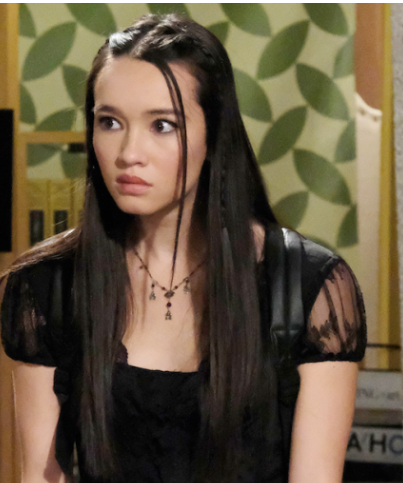
Days of Our Lives may have just delivered one of its biggest fake death setups in years, because the more details that emerge about Sophia Choi’s supposed death, the less believable the entire story becomes. The show is clearly pushing the idea that Sophia fell into the river and never made it out alive, but the actual evidence onscreen tells a completely different story. In classic Salem fashion, the most important piece of evidence is also the one thing nobody has found: Sophia’s body.
The first massive clue came from the gun recovered in the river. Shawn and Jada confirmed that the weapon had a shaved-off serial number, instantly turning what looked like a tragic impulsive act into something far more suspicious. This was not a normal legally purchased firearm. Someone deliberately removed the identification markings to make the gun untraceable. That alone completely changes the narrative surrounding Sophia. A teenage girl already spiraling emotionally somehow obtained an illegal weapon tied to criminal activity? That explanation makes absolutely no sense. The only logical conclusion is that someone else was involved long before Sophia disappeared.
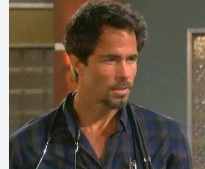
The show practically confirmed that theory through Shawn’s own dialogue. When he openly admitted that Sophia “was working with someone else,” it stopped sounding like speculation and started sounding like a setup for a future reveal. That line was far too direct to ignore. DOOL writers rarely include dialogue like that unless it is meant to plant seeds for a larger twist later. Suddenly the river incident no longer feels like a suicide tragedy. Instead, it feels like a staged disappearance orchestrated with outside help. Someone may have provided the weapon, helped fake the evidence, or even planned Sophia’s escape route before she vanished.
The biggest hole in the official story is still impossible to overlook: there is no body. Rescue teams searched the river, dredged the area, and recovered the gun, but Sophia herself remains missing. That detail matters more than anything else because Salem history has taught viewers one lesson over and over again. If there is no body, the character is probably not dead. DOOL has revived countless characters after explosions, shootings, fires, crashes, and drownings. The writers know the audience understands this pattern, which is exactly why withholding Sophia’s body feels intentional. If they truly wanted this death to feel final, they would have shown definitive proof immediately.
Amy’s behavior may actually be the clearest sign that Sophia survived. While everyone around her slowly begins accepting the idea that Sophia is gone, Amy continues resisting that conclusion. Her emotional dialogue about other Salem residents surviving supposedly fatal falls did not sound random at all. It sounded like the writers were speaking directly through her. In soap operas, grieving parents are often used to foreshadow hidden truths before the rest of the town catches up. Amy repeatedly refusing to believe Sophia is dead feels less like denial and more like instinct. Deep down, she may already sense that her daughter escaped.
Jada’s investigation also keeps hinting that something is wrong beneath the surface. Her comments about “missing something” create the impression that law enforcement itself does not fully believe the evidence adds up. That uncertainty is critical because the case should already be straightforward if Sophia truly drowned. Instead, the investigation keeps introducing more unanswered questions. Why was the serial number removed? Who helped Sophia obtain the gun? Why has no trace of her body surfaced? Why does Shawn believe another person was involved? Every new clue pushes the story further away from accidental death and closer toward conspiracy.
Another suspicious detail is how carefully the show avoids revealing exactly what happened in Sophia’s final moments before entering the river. DOOL is known for using fragmented flashbacks and incomplete scenes when hiding a future twist. The writers may intentionally be leaving out the part where Sophia was rescued or escaped. If an accomplice was waiting nearby, the entire river scene could have been staged to create the illusion of death while Sophia disappeared somewhere else entirely. That would explain why the physical evidence feels incomplete and why investigators continue circling the same unanswered questions.
The accomplice theory also opens the door to an even bigger future storyline. Whoever helped Sophia vanish would likely need connections, resources, and the ability to cover tracks. The shaved serial number suggests criminal involvement far beyond what Sophia could manage alone. This immediately raises suspicion around powerful Salem figures capable of making evidence disappear. The storyline suddenly becomes less about one missing teenager and more about a hidden partnership that has not yet been exposed.
At this point, the evidence only proves that something violent happened near the river. It does not prove Sophia Choi died there. The gun proves manipulation. The missing serial number proves planning. Shawn’s dialogue proves another person was involved. Amy’s refusal to accept the story proves the emotional narrative is still unfinished. And the missing body remains the single biggest clue of all.
In Salem, death only feels real when the writers want it to be real. Right now, every clue surrounding Sophia Choi suggests the exact opposite.
