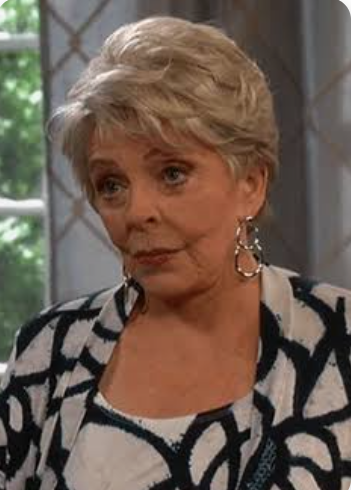
Days of Our Lives could be preparing an explosive financial scandal, and Julie Williams may become the unexpected force who uncovers the truth behind a crisis threatening one of Salem’s most meaningful institutions. Horton Free Clinic is facing the possibility of closure because of financial pressure, leaving Julie determined to protect the legacy of her grandfather, Dr. Tom Horton. Chad DiMera is stepping forward to help bring attention to the situation, but what begins as a campaign to save a beloved clinic could develop into something far more dangerous. What if the financial records reveal that money intended to support the clinic never reached its destination?
For Julie, this crisis is deeply personal. The Horton family has been connected to medicine, compassion, and community service for generations. Tom Horton was not simply a respected physician; he represented the belief that helping people should remain at the center of Salem’s identity. A clinic carrying his name therefore symbolizes much more than a building. Losing it would feel like losing another piece of the family’s history.
The immediate problem is serious. Julie has learned that the clinic could close because of budget cuts, and Kayla Johnson has acknowledged the hospital’s financial difficulties. These developments establish a genuine threat to the clinic’s future. They do not, however, prove that anyone has stolen money or deliberately sabotaged its operations. Financial pressure can arise from ordinary budget shortfalls, rising expenses, changing priorities, or insufficient funding.
Julie is not someone who accepts defeat easily. Her instinct is to fight for the people and institutions she loves, and she has proposed using public attention to support the clinic. Chad’s involvement in interviewing her creates an opportunity to explain the clinic’s importance to Salem residents. A public appeal could encourage donations, attract volunteers, and pressure decision-makers to reconsider the proposed closure.
But increased attention can also bring increased scrutiny. Once the community begins asking why the clinic lacks sufficient funding, administrators may face questions about past budgets, promised contributions, and the allocation of charitable resources. Those questions would be entirely reasonable for an organization facing closure.
The most dramatic new evidence would involve a previously promised donation. Imagine Julie learning that a substantial contribution had been announced or pledged, only for the clinic’s financial statements to show that the money was never received. No such missing donation has been confirmed. Nevertheless, the discrepancy would create a clear investigative question: was the contribution canceled, delayed, redirected, or improperly recorded?
Chad could become essential to finding the answer. As someone connected to both Salem’s prominent families and the world of business, he may be able to ask difficult questions about the clinic’s funding. His involvement would be especially interesting if the records led toward a company or donor connected to the DiMera organization. That connection would not establish wrongdoing, but it could place Chad in another uncomfortable position between family loyalty and public responsibility.
The strongest twist would not require a simple villain stealing from sick patients. Perhaps the donation had been made subject to conditions that were never fulfilled. Perhaps an intermediary organization received the money but failed to transfer it. Or perhaps a corporate pledge was publicly celebrated without ever becoming a legally enforceable commitment. Each possibility would have different consequences, and the investigation would need actual documentation to distinguish them.
Julie would likely be furious if she discovered that the clinic had been used to generate publicity without receiving meaningful financial support. Her anger could become a powerful force for accountability, especially if residents who relied on the clinic were suffering because of the funding gap.
Kayla would have to focus on the practical consequences. While Julie and Chad investigated, patients would still need access to care. Staff members might face uncertainty about their jobs, and the hospital would need to consider how to protect essential services if the clinic could not remain open.
The story could also create an unexpected alliance between generations. Julie would represent the Hortons’ long history of service, while Chad could use his resources to investigate the modern financial systems threatening that legacy. Their partnership might become one of Salem’s most meaningful efforts to protect its community.
The most satisfying outcome would be discovering the true reason for the shortfall and forcing the responsible decision-makers to address it. Even if no criminal misconduct were found, the process could expose serious failures of transparency and accountability.
For now, the clinic’s financial crisis is real, while the proposed missing donation remains hypothetical. But the situation already contains the ingredients for a compelling investigation: a beloved institution, a determined family matriarch, and questions about money that cannot be ignored.
Julie is fighting to save her grandfather’s legacy. If the financial records contain an unexpected secret, that fight could become much bigger than anyone in Salem anticipated.
