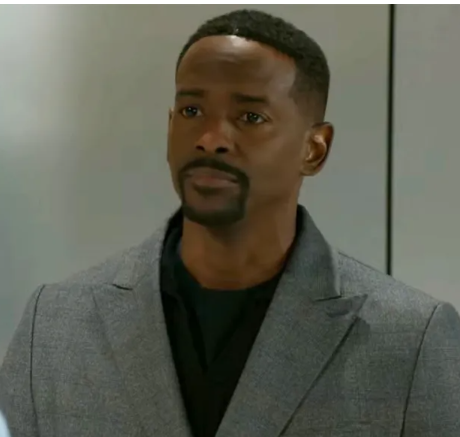
When Tomas decided to ask Ted for permission to marry Kat, the moment appeared destined to become one of the most heartwarming scenes in Beyond the Gates. It had all the ingredients of a traditional soap milestone: a man seeking a father’s blessing before proposing to the woman he loves. But the June 25 episode may have hidden something far more unsettling beneath that emotional conversation. Ted’s response sounded calm, respectful, and measured—but a closer look suggests it wasn’t approval at all. It may have been a carefully disguised warning that almost everyone overlooked.
From Tomas’s perspective, asking Ted first was the respectful thing to do. After everything Kat had survived, he wanted to prove he was serious about their future together. The request itself seemed sincere, and viewers naturally expected Ted to smile, welcome him into the family, and offer his full blessing. Instead, the conversation immediately carried a different emotional weight. Ted wasn’t cold, but he wasn’t celebrating either. His words felt restrained, almost as though he was choosing every sentence with extreme care.
That cautious tone becomes even more meaningful when remembering the history between Tomas and Kat. Their relationship has already endured one devastating betrayal after Tomas became involved with Eva, breaking Kat’s trust in one of the most painful ways imaginable. Although time has passed and Tomas has tried to rebuild what he destroyed, Ted never suggested that the past had simply disappeared. Before discussing the proposal, he reminded Tomas of the hurt he had caused. That detail completely changes the context of everything that followed.
Then came the line that may have altered the entire scene.
“I won’t stand in the way if that’s what Kat wants.”
At first glance, it sounds supportive. But listen carefully to what Ted never actually says.
He never tells Tomas, “You have my blessing.”
He never says, “I’m happy for both of you.”
He never congratulates him.
He never declares that Tomas has earned another chance.
Instead, Ted shifts the entire decision onto one person: Kat.
That wording may be the biggest clue hidden inside the conversation. Rather than approving Tomas, Ted simply refuses to interfere with Kat’s decision. Those are two very different things. One expresses confidence in the man asking the question. The other expresses trust only in the daughter making the choice. Ted’s loyalty never moves away from Kat, and that subtle distinction may have been intentional.
The condition hidden inside Ted’s sentence is impossible to ignore once it becomes clear.
“If that’s what Kat wants.”
Those six words quietly establish the only reason Ted is stepping aside. His acceptance depends entirely on Kat’s wishes—not on Tomas proving himself worthy. In other words, Ted is not promising unconditional support. He is respecting his daughter’s independence while making it clear that Tomas remains responsible for what happens next. The burden of protecting Kat’s heart now rests completely on him.
Another overlooked scene strengthens that interpretation. Before the proposal, Chelsea warned Tomas that the timing was wrong. Kat had just survived an emotionally exhausting period, and Chelsea believed rushing into an engagement could create even more pressure. Tomas chose to ignore that advice because he believed nearly losing Kat had shown him what truly mattered. When Chelsea’s concern is placed alongside Ted’s carefully measured response, a pattern begins to emerge. Two people closest to Kat questioned whether this proposal was happening for the right reasons and at the right moment.
Perhaps the most interesting part of the entire exchange is what it reveals about Ted himself. Many soap fathers respond to situations like this by issuing ultimatums, forbidding relationships, or trying to control their daughters’ futures. Ted does none of those things. He doesn’t order Tomas to stay away. He doesn’t manipulate Kat into rejecting the proposal. Instead, he gives her complete freedom to make her own choice. At the same time, however, his words carry an unmistakable message beneath the surface. Respecting Kat’s independence does not mean forgetting what Tomas once did.
That may be why Ted’s response feels less like permission and more like accountability.
He isn’t telling Tomas that the past has been forgiven.
He isn’t declaring that trust has been fully restored.
He’s making one thing perfectly clear: if Kat chooses this future, the responsibility for protecting that happiness belongs entirely to Tomas. There will be no excuses if history repeats itself.
Looking back, the proposal scene may never have been about Ted giving his blessing. It may have been about Ted drawing a quiet line that Tomas cannot afford to cross again. Sometimes the strongest warning isn’t delivered through anger or threats. Sometimes it’s hidden inside a calm sentence spoken by a father who has already watched his daughter suffer once before.
If that interpretation is correct, then the most important moment in the proposal wasn’t Tomas asking for permission. It was Ted reminding him—without ever raising his voice—that a second betrayal would come with consequences no polite conversation could erase.
