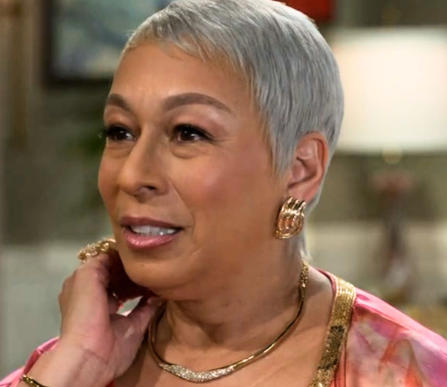
Anita Dupree’s successful surgery should have marked the end of one of Beyond the Gates’ most emotional storylines. Instead, it may have quietly opened the door to an even bigger mystery. The series has spent months exploring BRCA, genetic testing, and the emotional toll of hereditary cancer, yet one critical question has remained unanswered from the very beginning. If Anita carries the BRCA mutation, where did it come from? The show has focused on the future of the Dupree family, but it has revealed almost nothing about the past that created this crisis.
Nicole has every reason to believe the worst is finally behind her. She watched her mother fight breast cancer, endure treatment, and survive surgery. She has also seen the devastating impact Anita’s diagnosis has had on the entire family, especially after Naomi tested positive for the same genetic mutation. But once the immediate medical emergency passes, Nicole may begin asking questions that nobody has been willing—or able—to answer. Surviving surgery does not erase the history that made the surgery necessary in the first place.
The BRCA storyline has always been presented as a warning for future generations. Anita’s diagnosis encouraged Nicole, Dani, and eventually Naomi to consider genetic testing and difficult medical decisions. Yet there is one strange omission that becomes harder to ignore with every episode. The audience knows almost everything about how BRCA affects Anita’s children and grandchildren, but almost nothing about the family members who came before her. For a story centered on inherited disease, that silence is impossible to overlook.
That missing history becomes even more suspicious when examining Anita’s background. The series has revealed important milestones from her adult life, her marriage to Vernon, her music career, and her role as the matriarch of the Dupree family. However, the show has never introduced Anita’s parents, never identified any brothers or sisters, and never explained whether cancer existed in previous generations. Those missing pieces are more than simple biography. They are exactly the details that could explain the origin of a hereditary BRCA mutation.
This is where Nicole could become the character who finally connects the dots. While everyone else celebrates Anita’s recovery, Nicole may realize that her family has been making life-changing medical decisions without knowing the complete family history. Every test result, every conversation about inherited risk, and every emotional decision has depended on information that may not be complete. If Nicole begins looking deeper into Anita’s past, she may discover that the biggest mystery was never the diagnosis itself, but the story that existed long before it.
Imagine Nicole reviewing family records or discussing Anita’s medical history with doctors after the surgery. Instead of finding clear answers, she could notice enormous gaps. There may be no documented history of grandparents, no information about aunts, and no explanation for where the BRCA mutation originated. That absence would not prove a conspiracy, but it would raise an unavoidable question. Was the family history truly unknown, or has an important chapter simply never been told?
The possibility becomes even more intriguing because hereditary cancer rarely exists in isolation. If Anita inherited the mutation, another relative may have carried it before her. Perhaps there was a mother who died young, a sister whose illness was never discussed, or another woman whose story disappeared long before Vernon entered Anita’s life. None of these possibilities have been confirmed by the series, but the lack of information leaves plenty of room for speculation. Sometimes the loudest clue is not what the story reveals—it is what the story carefully avoids mentioning.
Such a revelation would completely transform Nicole’s emotional journey. Instead of seeing Anita only as a survivor, Nicole might begin to understand that her mother has been carrying the weight of an entire family’s tragedy. Anita may have chosen silence not because she wanted to deceive anyone, but because reopening old wounds could have caused even greater pain. Protecting her daughters may have meant burying painful memories that stretched back decades.
The timing makes this theory even more compelling. Vernon is simultaneously facing a potential new career opportunity while Anita recovers from surgery. If Vernon is forced to divide his attention between family responsibilities and a major professional decision, Nicole could become the one person determined to uncover the truth. That shift would place her at the center of both the emotional and investigative sides of the storyline, creating new tension inside the Dupree family without contradicting established events.
Naomi’s positive BRCA result also gives this theory far greater emotional weight. The mutation is no longer Anita’s burden alone. It now reaches multiple generations, affecting future choices, relationships, and medical decisions. If Nicole uncovers evidence that the Dupree family has been living with this inherited risk for much longer than anyone realized, Anita’s diagnosis would stop being the beginning of the story. Instead, it would become the latest chapter in a family history that has remained hidden for years.
Ultimately, the most shocking twist may have nothing to do with another test result or another diagnosis. The real secret could be the forgotten history behind the Dupree family itself. Anita’s surgery may have saved her life, but it may also have exposed the one mystery the series has never answered. If Nicole decides to uncover where the BRCA mutation truly began, she may discover that the greatest Dupree secret was never hidden inside a medical report. It was hidden inside a family history that nobody has ever been allowed to tell.
