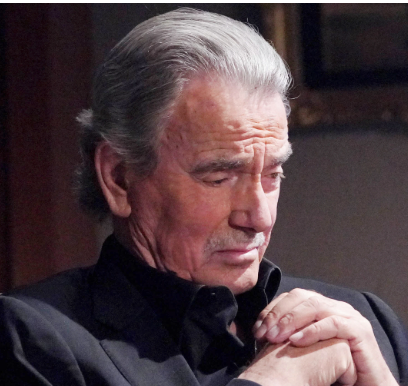
The Young and the Restless has once again reminded the television industry why it remains the gold standard of daytime drama. Leading the entire 2026 Daytime Emmy field with an impressive 18 nominations, the CBS powerhouse continues to prove that its storytelling and performances still command enormous respect. Among the biggest headlines is Eric Braeden earning yet another nomination for Outstanding Lead Performance, reinforcing his status as one of daytime television’s most enduring stars. Yet the timing of this recognition raises an intriguing question. While Braeden is being celebrated by the industry, Victor Newman appears to be walking into perhaps the most complicated battle his empire has faced in years.
The Emmy nominations themselves are clear, confirmed facts. The Young and the Restless leads all daytime dramas with 18 nominations, and Eric Braeden has once again secured a Lead Actor nomination for his portrayal of Victor Newman. However, there is an important distinction that should never be overlooked. Emmy recognition reflects performances submitted during the eligibility period and is judged independently of storylines currently unfolding on screen. In other words, this nomination celebrates Braeden’s acting achievements—it does not reveal whether Victor will ultimately win or lose the conflicts dominating Genoa City today.
Even so, the current landscape of The Young and the Restless makes Victor feel more essential than ever. Nearly every major storyline now seems to orbit around him. Whether the conflict involves Kyle Abbott’s growing defiance, Nikki Newman’s increasingly complicated position, Adam’s constant struggle for trust, Chelsea and Sally navigating shifting alliances, Audra pursuing her own ambitions, Billy refusing to abandon old rivalries, or Cane emerging as another unpredictable challenge, Victor remains the common thread connecting nearly every major power struggle. Rather than existing on the edge of these stories, he has become the center point where they all collide.
That concentration of conflict is unusually significant. In many previous eras, Victor typically battled one primary rival while managing smaller family disputes in the background. The current narrative feels very different. Instead of confronting a single enemy, Victor appears to be fighting on multiple fronts simultaneously. Every decision risks creating another adversary. Every alliance seems temporary. Every victory carries the possibility of opening another battle somewhere else inside the Newman empire. The sheer number of active conflicts creates the impression that the writers are deliberately placing unprecedented pressure on the character.
Kyle Abbott represents one of the clearest examples of this shifting dynamic. Rather than simply resisting Victor’s influence, Kyle increasingly symbolizes a younger generation unwilling to accept Newman dominance without question. Meanwhile, Nikki’s position has become more emotionally complicated, creating tension that extends beyond boardrooms and into Victor’s own family. Adam continues to present the familiar challenge of loyalty and ambition, while Billy remains determined to oppose Victor whenever opportunities arise. Add Audra’s corporate maneuvering and Cane’s unpredictable moves into the equation, and the result is an empire surrounded by pressure from every direction.
This is where the Emmy recognition creates a fascinating contrast. Off screen, Eric Braeden continues to receive some of the highest honors available in daytime television. His portrayal of Victor Newman remains respected by award voters after decades in the role, demonstrating remarkable consistency and longevity. On screen, however, Victor is hardly enjoying stability. Instead, he appears to be carrying the weight of nearly every major storyline, making him both the show’s greatest strength and its most vulnerable figure. The actor is being recognized for excellence while the character faces one of the most demanding periods of his fictional life.
It is also important not to confuse these two realities. Some viewers naturally wonder whether a major Emmy nomination hints that Victor is destined for another triumphant ending. History suggests otherwise. Award nominations and current story outcomes operate on entirely separate timelines. Emmy voters evaluate completed performances from the eligibility window, while writers continue developing future scripts long after those performances have been submitted. As a result, Eric Braeden’s nomination should never be interpreted as evidence that Victor will ultimately defeat Kyle, reconcile every family conflict, or preserve complete control over Newman Enterprises. Those storylines remain entirely independent of the awards process.
What makes the situation so compelling is not the nomination itself but what it highlights about Victor’s role within the series. The Young and the Restless may feature numerous families, corporations, romances, betrayals, and rivalries, yet an extraordinary number of those narratives still converge around Victor Newman. Remove him from the equation, and the structure of Genoa City’s power balance changes dramatically. That central position naturally raises speculation that the writers may be building toward a defining reckoning—one massive confrontation capable of reshaping relationships across the canvas. Such an outcome remains purely editorial analysis rather than confirmed story information, but the current narrative certainly creates that impression.
Ultimately, the biggest takeaway is not that Eric Braeden received another well-deserved Emmy nomination. It is that the nomination arrives at a moment when Victor Newman stands at the crossroads of nearly every important conflict in The Young and the Restless. The awards celebrate the performances that brought Victor to this point. They do not reveal where his journey ends. Whether this empire-wide war becomes another legendary Newman victory or the beginning of his greatest reckoning remains unanswered. And perhaps that uncertainty is exactly why Victor Newman continues to dominate both the screen and the conversation.
