Britt’s Huntington’s diagnosis was not a tragedy. It was a weapon.
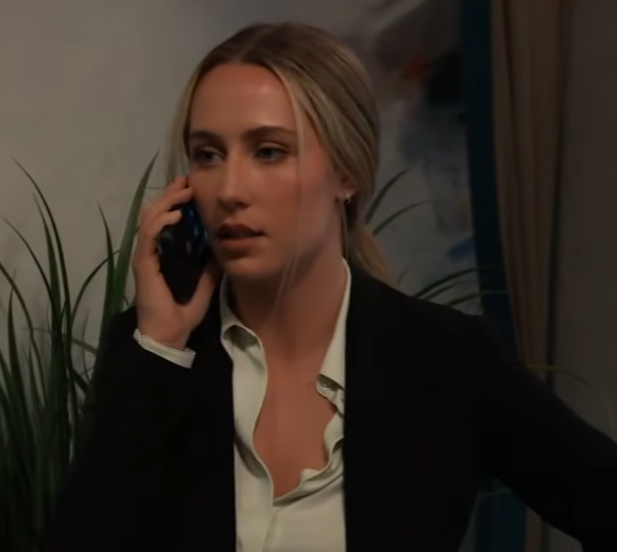
The July 27 episode gave that fact its full emotional weight when Britt reunited with Jason and told him that she had never had Huntington’s disease. She explained that Cullum had manufactured the diagnosis, leaving her to live with the belief that she was dying and to make desperate decisions around his so-called miracle medicine. [3] That is the confirmed core of the story. The diagnosis was false. Cullum created the lie. The damage was real.
What makes the secret more disturbing is that a false diagnosis is not just a sentence spoken aloud. For Britt to believe it, there had to be a process that looked convincing enough to defeat her instincts and reshape her life. That does not prove that an entire network is involved, nor does it establish a particular laboratory, doctored DNA sample or hidden collaborator. No available recap identifies those details. But it does create the sharpest unanswered question in the storyline: what evidence had to exist for Cullum’s lie to survive long enough to control Britt?
The show placed that question beside another clue the very next day. On July 28, Josslyn told Emma that she had been asking questions about Faison because she was trying to understand what Cullum knew about Anna. After learning that Drew was alive, she made a secure call to the WSB’s Berlin office. [1] The recap does not say that Josslyn found Britt’s records, reopened the diagnosis or connected the Berlin call to a specific file. Yet the timing is hard to ignore. Faison, Cullum, the WSB and an unexplained paper trail are now circling the same broader history.
That is why Britt’s story cannot be reduced to a medical twist. The emotional crime was never only the false result. It was the way the result forced her to see herself as a person running out of time. The truth may free her from the diagnosis, but it cannot instantly erase the fear, choices and guilt she carried while believing it. Jason’s reunion with Britt makes that wound personal rather than procedural: he is not hearing about a case file. He is seeing what somebody did to a woman he loves. [3]
The language around the “paper trail” must stay precise. It is reasonable editorial analysis to ask whether falsified medical records, prescriptions or a chain of custody could become relevant later. It is not responsible to claim the show has already confirmed a swapped genetic test, a specific medical conspiracy or an accomplice. The available evidence stops with Cullum’s deception. [3] That limitation makes the mystery stronger, not weaker. A villain can die, disappear or lose control, but documents have a way of surfacing when the wrong person asks the right question.
Josslyn’s Berlin call supplies exactly that kind of pressure. She is no longer merely reacting to the WSB; she is actively asking who knew what about Cullum and Faison. [1] If the story wants to turn Britt’s pain into a larger reckoning, the route is there: not by inventing a new diagnosis, but by revealing how far the old lie traveled. A record can implicate people who never met Britt. A name inside a file can reopen an alliance that believed itself safely buried.
Editorial analysis: The false diagnosis and Cullum’s role are canon. Any claim about a lab, accomplice, genetic-test manipulation or surviving records remains unconfirmed theory until the show identifies it.
Britt has already won the most important battle: she knows she was not dying. The next battle may be harder. It will be about learning who needed her to believe she was.
