Sidwell may have just made the one mistake that could destroy the entire case against Sonny Corinthos. After the vicious Pentonville attack left Sidwell fighting for his life and Curtis badly injured, all signs appeared to point directly at Sonny. But Sidwell’s strange September 28 response to Dante suddenly makes the evidence look very different. One carefully chosen answer could be the clue that exposes an elaborate setup — and raises the explosive possibility that Sidwell secretly arranged his own beating.
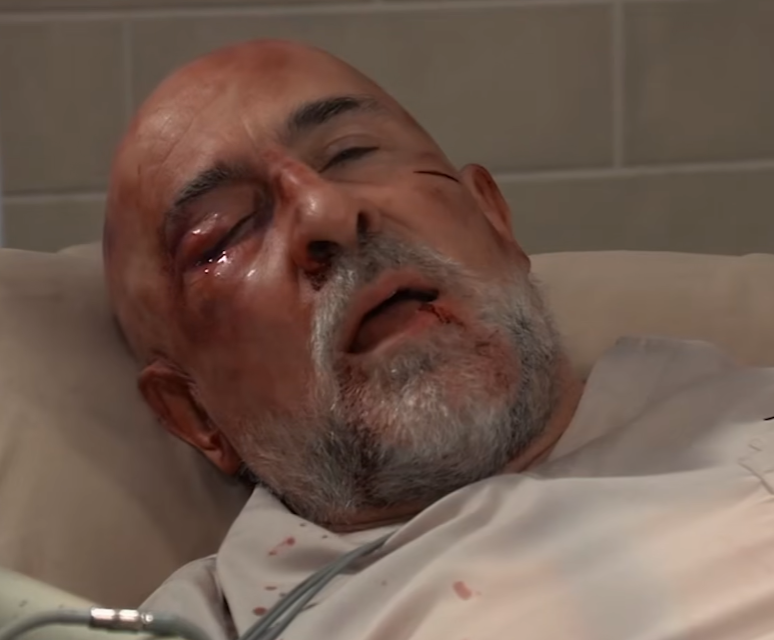
When Dante confronted the injured Sidwell at General Hospital and demanded to know who was responsible, Sidwell had the perfect opportunity to accuse Sonny directly. Instead, he gave Dante an incredibly loaded answer: “Who do you think?” Before he could be questioned further, his medical condition deteriorated. On the surface, the implication seemed obvious. But Sidwell never actually said Sonny ordered the attack.
That distinction becomes much more suspicious when Curtis’ statement is added to the equation. Curtis told investigators that the men responsible for the beating identified Sonny as the person behind it. Suddenly, Sonny’s name was attached directly to the attack — but not by Sidwell. The attackers themselves conveniently supplied the name, while Curtis survived to repeat exactly what he heard.
Why would professional attackers working for Sonny announce Sonny’s name at the scene of the crime? That would be an extraordinary mistake. But if the purpose of the attack was to frame Sonny, saying his name would not be a mistake at all. It would be the entire point.
Even more troubling is what Sidwell did before the attack ever happened. During his conversation with Alexis, Sidwell had already raised the possibility that Sonny had people inside Pentonville who could hurt him. In other words, Sidwell planted the Sonny narrative before anyone laid a hand on him. Then, after the beating, his cryptic “Who do you think?” pushed Dante toward the exact same conclusion without Sidwell having to make a direct accusation.
That creates a chilling possibility. Sidwell may not have been predicting Sonny’s attack when he spoke to Alexis. He may have been establishing an alibi for a crime that had not happened yet.
Curtis’ warning makes the situation even harder to ignore. Curtis learned that something dangerous was coming and warned Sidwell to protect himself. Sidwell could have alerted prison authorities. He could have removed himself from danger. Instead, he stayed where the threat could reach him. If Sidwell genuinely believed Sonny was preparing to have him attacked, refusing an obvious opportunity to avoid that attack makes little sense.
Unless Sidwell needed the attack to happen.
Curtis may never have been an intended target at all. He had been warned to stay away, but he returned and walked directly into the violence. That would explain why Curtis became collateral damage. Ironically, his unexpected presence may also have made the alleged frame-up stronger. Sidwell no longer needed to accuse Sonny himself because Curtis became an independent witness who heard Sonny’s name from the attackers.
There is another dangerous complication: Sonny really did send a message into Pentonville. His secret meeting with Vito and subsequent admission that a message had been sent creates exactly the kind of circumstantial evidence investigators could use against him. But sending a message is not the same thing as ordering Sidwell beaten. If someone knew Sonny was already communicating with people inside the prison, that legitimate activity could provide perfect camouflage for a completely different operation.
And Sidwell had plenty to gain. Before the attack, he was trying to change his legal situation and get Alexis involved. Afterward, he was no longer simply another prisoner. He was a badly injured inmate whose life appeared to be threatened by Sonny Corinthos. He was transferred out of his cell and into General Hospital while law enforcement immediately began investigating Sonny.
There is one major problem with the theory: Sidwell nearly died. His condition became so serious that doctors had to fight to stabilize him. Would Sidwell really risk his own life just to manufacture a case against Sonny?
That question could hide an even bigger twist. Perhaps Sidwell arranged a controlled beating designed to injure him, leave evidence pointing toward Sonny and force authorities to move him out of Pentonville. But what if someone else discovered the plan and secretly changed the orders? A staged assault could have suddenly become a genuine attempted murder.
That would make Sidwell both mastermind and victim.
Now his September 28 answer sounds completely different. “Who do you think?” may not have been the words of a terrified man identifying his attacker. It may have been Sidwell checking whether everyone had reached the conclusion he carefully planted before the first punch was ever thrown.
If that is what happened, Sonny’s biggest clue may be hiding inside Sidwell’s own words. The beating looked like the crime. The hospital transfer looked like the consequence. But the real objective may have been much simpler: make sure everyone in Port Charles believed Sonny Corinthos ordered it.
