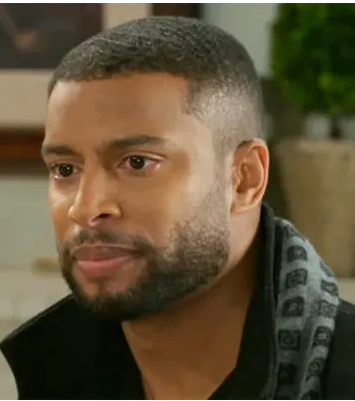
Martin Richardson’s behavior during the June 12 episode raised a question that may be even bigger than the secret he has spent years trying to hide.
A man facing a serious medical emergency should be desperate for treatment. Instead, Martin appeared far more terrified of going to the hospital than of whatever physical condition was threatening him. That reaction felt strange from the moment it happened. It wasn’t the response of someone worried about a diagnosis. It looked like the response of someone afraid that doctors might discover something he never wanted anyone to see.
And that possibility changes everything.
For years, the story surrounding Martin’s secret has focused on the fatal incident that has haunted him ever since. The official narrative suggests a tragedy that spiraled into a massive cover-up, but there has always been one major problem with that explanation. If the incident was truly a straightforward act of self-defense, why did so many powerful people become involved? Why were so many risks taken to keep the truth buried? And why has Martin continued living in fear long after the danger should have passed?
The answer may have nothing to do with the killing itself.
It may have everything to do with what was recorded immediately afterward.
One detail that cannot be ignored is the possibility that Martin underwent medical or psychological evaluation following the incident. If that happened, those records would have been created before years of damage control, revised stories, and carefully managed explanations. Unlike rumors, family narratives, or even police reports, medical records are often designed to document exactly what happened in the moment.
That is what makes the hospital so dangerous.
A medical file could contain information that was never meant to become public. It could include trauma evaluations, psychiatric assessments, statements made during treatment, or details recorded before anyone had the opportunity to shape the narrative. If Martin knows those records still exist, his panic suddenly makes much more sense.
In fact, his fear may reveal more than the records themselves.
The June 12 episode seemed to show a man who believed exposure would be worse than physical suffering. That is an extraordinary reaction. Most people fear illness. Martin appeared to fear discovery.
The deeper question is what exactly could be hidden inside those files.
One possibility is that the records contain information about the real circumstances surrounding the fatal confrontation. Another possibility is that they identify someone Martin was protecting. This would explain why the cover-up became so much larger than the incident itself. Powerful people do not usually mobilize to conceal an act of self-defense. They mobilize to protect individuals, reputations, and secrets that could destroy lives.
That brings the focus back to Smitty.
What if Martin was never protecting himself?
What if the person at the center of the secret was actually Smitty?
The theory may sound extreme at first, but it helps explain several pieces of the puzzle. Martin has carried enormous guilt for years. He has repeatedly struggled with emotional breakdowns, flashbacks, and overwhelming anxiety. He has also gone to extraordinary lengths to keep the truth away from the people he loves most. Those are not the actions of someone merely hiding a past mistake. They are the actions of someone guarding a secret he believes could devastate another person.
If the victim had some connection to Smitty, everything would suddenly look different.
The killing itself would no longer be the shocking revelation.
The motive behind it would.
This theory becomes even more compelling when examining the unusual scale of the cover-up. The official explanation has never fully matched the level of secrecy surrounding the event. Too many influential people seemed determined to keep the story buried. Too many questions remain unanswered. Too many details appear missing.
That is why Martin’s medical records have become such a fascinating piece of the puzzle.
Those files may contain names, timelines, statements, or evaluations that contradict everything the public currently believes. They may reveal who was present, who was protected, and why certain individuals worked so hard to control the narrative. Even a single overlooked detail could unravel years of carefully maintained secrecy.
And that is exactly what makes Martin’s fear so revealing.
The hospital represents something he cannot fully control.
Family members can stay silent.
Old allies can protect secrets.
But records remain.
If Martin’s medical history still contains the original truth, one emergency visit could trigger a chain reaction that exposes everything. The secret that survived for years might not be destroyed by an enemy, an investigation, or even a confession.
It could be destroyed by a file sitting in a hospital archive.
And if that file is finally opened, the biggest shock may not be who Martin killed.
It may be who he was protecting all along.
