What if the biggest twist in General Hospital right now isn’t that Nathan isn’t Nathan—but that he never stopped being Nathan at all? The explosion of fan theories surrounding “Fake-than” and the shocking reveal of the name Cassius Faison has created one undeniable conclusion: something is deeply wrong, and the truth is being carefully controlled. Fans aren’t just reacting—they’re connecting dots, and those dots are forming a much darker, more calculated picture than a simple twin reveal.
The strongest consensus among viewers is clear: the man walking around is not behaving like the real Nathan West. His emotional detachment, his lack of urgency to reconnect with Maxie, and even subtle physical inconsistencies like not being able to perform familiar actions have all raised red flags. For longtime fans, these are not small character changes—they are identity fractures. The real Nathan, as many point out, would have been at Maxie’s side instantly. This version hesitated, diverted, and chose Lulu instead, and that alone has convinced many that something fundamental has been altered.
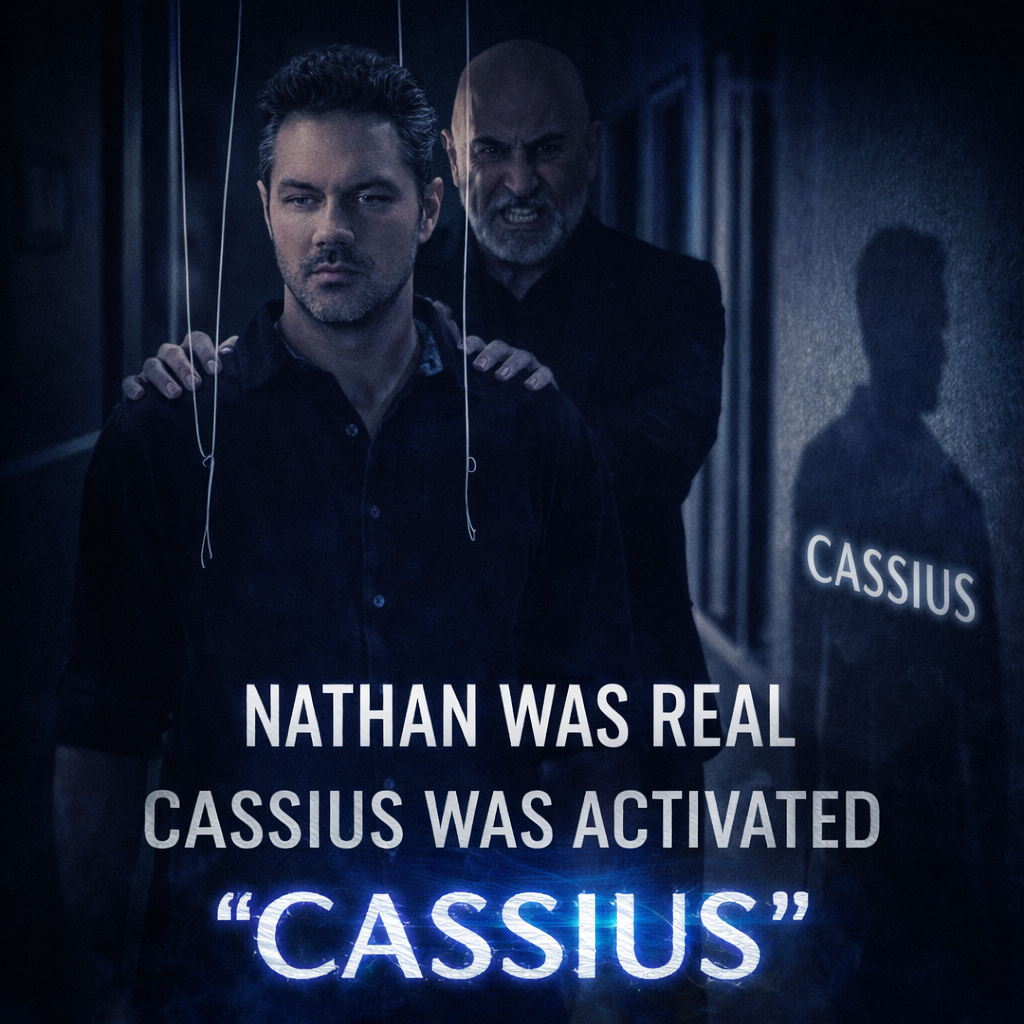
From there, the theories split into three major directions, but one is rapidly overtaking the others. While some still believe in the classic soap twist of a secret twin—Cassius being the hidden fourth child of Faison—others are questioning the logic. Fingerprints, memories, and behavioral patterns don’t align cleanly with a twin scenario. The clone theory, while dramatic, feels too extreme even for GH standards. That leaves the most compelling explanation: Nathan has been brainwashed. Not replaced. Rewritten.
The idea that “Cassius” is not a separate person but a programmed identity is gaining serious traction. Fans are drawing direct parallels to past mind control storylines, especially Drew’s memory manipulation under the Cassadines. In this theory, Nathan truly believes he is himself—until triggered. The moment Sidwell calls him “Cassius Faison,” it may not just be a name. It may be a switch. A command. A signal that activates an entirely different persona hidden beneath the surface. That would explain the eerie calm, the lack of confusion, and the unsettling sense that he knows more than he should—but not all the time.
This is where Sidwell becomes the center of everything. Across fan discussions, one idea keeps resurfacing: Sidwell is not reacting to chaos—he is orchestrating it. If he knows the name Cassius, if he can activate it, then he is not just a villain in the story. He is the architect behind it. That would mean Nathan’s return, Maxie’s coma, and even the shifting dynamics between Lulu and the rest of Port Charles may all be part of a larger design. A design that depends on control, misdirection, and perfectly timed reveals.
Maxie’s role in this puzzle is particularly heartbreaking. Fans overwhelmingly agree that she should have been the one to recognize the truth first. And in many ways, she almost did. Her instinct that something was off validates the idea that the real Nathan is still in there somewhere. But her removal from the equation—through the suspicious “tainted cream” incident—now looks less like coincidence and more like strategy. If Maxie is the one person who could expose him, then taking her out was not random. It was necessary.
Meanwhile, Lulu has become one of the most polarizing figures in the storyline. Some fans see her as a victim, drawn into a connection that was engineered through shared trauma and emotional vulnerability. Others see her involvement as betrayal, a “karma” arc where she unknowingly chose the wrong man. But if the brainwashing theory holds true, then Lulu may not just be a romantic complication—she may be part of the control mechanism. A stabilizer for Nathan’s programmed identity, keeping him anchored in the version Sidwell needs him to be.
All of this ties directly into the larger, more explosive arc involving Rocco, Jason, and the shooting of Cullum. Fans are beginning to suspect that “Fake-than” knows exactly what happened that night. If he is operating under orders, then protecting Rocco—or allowing Jason to take the fall—may not be an act of morality, but part of the plan. Even more shocking is the growing belief that Rocco may not have been the one who actually shot Cullum. If a second shooter exists, then the entire narrative collapses, and the truth becomes far more dangerous than anyone realizes.
What happens next depends on one critical moment: exposure. If Rocco confesses, if Nathan is triggered at the wrong time, or if Sidwell loses control of the narrative, everything could unravel at once. Jason could be cleared. Sonny could be pulled back into the center of the storm. And Nathan—if he is still in there—could become both the key witness and the biggest threat.
This is no longer just a mystery about identity. It is a story about control, manipulation, and the terrifying possibility that someone can rewrite a person without erasing them. And if Cassius is not a person, but a command, then the real question is not who Nathan is—but who gets to decide when he becomes someone else.