What if the most dangerous threat right now isn’t the WSB, not a criminal mastermind, but a teenage boy who simply can’t live with what he’s done? In General Hospital, the fallout from the pier shooting is no longer about evidence or alibis. It’s about pressure. And Rocco is reaching a breaking point that could shatter every carefully constructed lie.
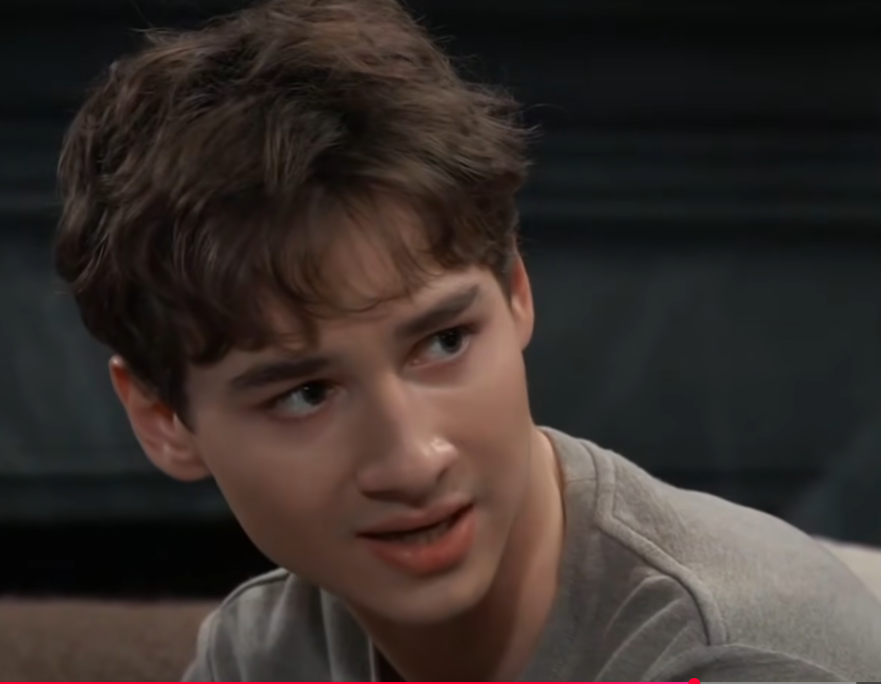
Rocco isn’t just hiding a secret. He’s living inside it. He knows he pulled the trigger. He knows Jason Morgan is now paying the price, sitting in custody as the fall guy for a crime he didn’t commit. That kind of knowledge doesn’t stay contained. It festers. It rewrites how a person sees themselves. And for Rocco, it’s turning into something far more dangerous than fear — it’s becoming unbearable guilt.
The emotional trigger is already in play. When Charlotte described how devastated Danny Morgan was watching his father taken away in shackles, Rocco didn’t just feel bad — he nearly broke. That reaction wasn’t subtle. It was the kind of involuntary crack that signals a mind under extreme strain. And in storytelling like this, those cracks don’t heal. They widen.

Here’s where the most explosive possibility emerges. Rocco doesn’t confess to the police. He doesn’t go to a lawyer. He doesn’t even tell his mother. He tells Charlotte. In a moment of emotional collapse, stripped of logic and driven purely by guilt, he could say the one thing that changes everything: “It wasn’t Jason… it was me.” Not a calculated decision. Not a strategic move. Just a kid who can’t hold it in anymore.
That’s the real danger. Charlotte is not equipped to carry a secret of this magnitude. She’s emotional, impulsive, and deeply connected to everyone involved. Once she knows, the truth is no longer contained. It becomes unstable. It could slip out in a moment of anger, confusion, or even an attempt to “fix” things. And all it takes is one wrong person overhearing, one misplaced comment, one emotional confrontation.
If that happens, the consequences would be catastrophic. Dante Falconeri would be forced into an impossible position. As a father, he would want to protect Rocco. As a cop, he would have no choice but to act. The moment the truth surfaces, the case is no longer closed. The WSB would reopen everything, and Jason’s sacrifice would instantly unravel.
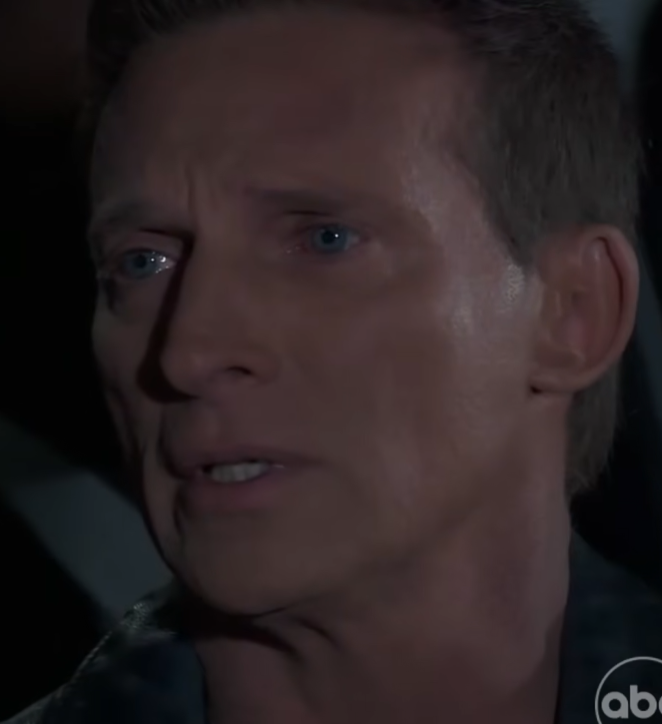
And Jason himself? His entire act of protection would be redefined. What once looked like loyalty and sacrifice could suddenly be framed as obstruction and conspiracy. Instead of being the man who saved a kid, he becomes the man who helped bury the truth. The moral high ground disappears, replaced by legal consequences that could be even worse than what he’s already facing.
But the most devastating fallout lands on Rocco. Because if the truth comes out this way — not as a controlled confession, but as an emotional spill — he doesn’t just face legal consequences. He has to live with the reality that he’s the one who exposed Jason, the one who caused the collapse, the one who couldn’t hold it together. That kind of psychological burden doesn’t fade. It defines a character.
And then there’s Lulu. Her decision to force silence, to insist that Rocco keep the truth buried at all costs, may be the very thing that pushes him over the edge. In trying to protect him, she may have trapped him in a pressure cooker with no release. Because silence doesn’t erase guilt. It amplifies it. And eventually, something has to give.
This is why the most shocking outcome isn’t a courtroom reveal or a forensic breakthrough. It’s a whisper. A single confession, spoken in the wrong moment to the wrong person. Not a calculated move, but an emotional collapse. And in that scenario, the truth doesn’t just come out. It explodes, taking Jason, Rocco, Lulu, and everyone connected down with it.
Because in the end, the biggest threat isn’t what happened on the pier. It’s who can’t stop thinking about it.