What looked like a tragic accident on Route 91 is starting to feel like something far more calculated. The moment Jordan swerved to avoid an oncoming vehicle, the chain reaction began—but that single detail changes everything. Cars don’t just “careen” out of nowhere at the exact wrong second unless something—or someone—put them there. This wasn’t chaos. It was timing. And in Port Charles, timing is rarely a coincidence.
The most telling clue is the presence of that unidentified vehicle. It didn’t just appear—it forced a reaction. Jordan didn’t lose control randomly; she was pushed into a split-second decision with no safe outcome. That kind of maneuver suggests intent. Whoever was behind that wheel didn’t need to hit Jordan directly. They just needed to make sure she crashed. It’s a classic tactic—create the illusion of an accident while ensuring the target never sees it coming.
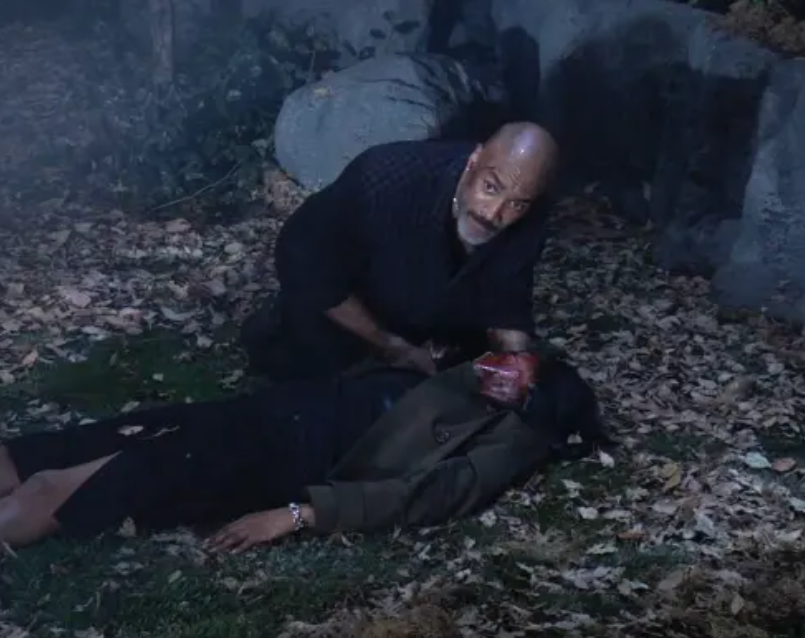
Then there’s the aftermath, and it only deepens the suspicion. The car didn’t just stop after impact—it became a ticking bomb. Gas leaking, doors jammed, communication cut off. Curtis couldn’t open the driver’s side, couldn’t call for help, and was forced to rely on chance. But was it really chance? The explosion came seconds after Jordan was pulled from the vehicle, almost as if the window for survival was deliberately narrow. Too early, and the victim dies. Too late, and there’s evidence left behind. This was precision disguised as disaster.
Even the location raises red flags. Route 91 isn’t just any road—it became the perfect stage. Isolated enough to delay immediate response, but accessible enough for a quick escape. Whoever orchestrated this knew exactly where to strike. The environment worked in their favor: darkness, limited visibility, and just enough traffic to blend in without drawing attention. This wasn’t a random stretch of highway—it was chosen.
The timing of other movements around the crash only adds to the theory that multiple pieces were already in motion. Carly and Valentin arriving when they did may look like coincidence, but it aligns too neatly with the sequence of events. If the crash was meant to be witnessed—or intervened in—it changes the entire narrative. A staged accident doesn’t always aim for death. Sometimes it’s about control, fear, or sending a message. And if that’s the case, then Jordan and Curtis weren’t just victims—they were part of a larger play.
There’s also the question of intent versus target. What if Jordan and Curtis weren’t even the intended victims? If the oncoming car was meant to intercept someone else, then this becomes even more dangerous. Port Charles has seen its share of mistaken identities and redirected plans. A hit gone wrong still leaves consequences—and often reveals more than a successful one ever could. The real target might still be out there, completely unaware that someone else took the fall.
What makes this situation even more chilling is how clean it appears on the surface. No obvious attacker. No direct collision. Just a “swerve,” a “crash,” and a fire. It’s the perfect cover story. But the details refuse to stay buried. The forced maneuver, the mechanical failure at the worst possible moment, the explosion that erased potential evidence—these aren’t random elements. They’re components of a controlled outcome.
If this was a setup, then someone didn’t just plan a crash—they engineered a narrative. One where everything looks accidental, where the victims can’t explain what happened, and where anyone asking questions sounds paranoid. But in Port Charles, the truth has a way of surfacing through the smallest inconsistencies. And this crash is full of them.
The most dangerous part is this: if someone could orchestrate something this precise without being seen, then they’re still out there. Watching. Adjusting. Waiting for the next move. Because accidents don’t repeat patterns—but plans do. And if this was only the first step, then whatever comes next won’t look like an accident either… even if it’s meant to.