The entire mystery surrounding Marco’s death is no longer centered on the pier, the weapon, or even the shooter — it is now laser-focused on one object that could detonate the entire storyline: Marco’s missing phone. Fans are overwhelmingly convinced that the truth isn’t hidden in speculation, but already recorded in cold, hard data — texts, timestamps, and possibly voice messages that detail exactly what happened leading up to the murder. This device is not just evidence; it is the narrative’s ticking time bomb. Once recovered, it has the potential to expose motive, movement, and manipulation in a way no witness testimony ever could.
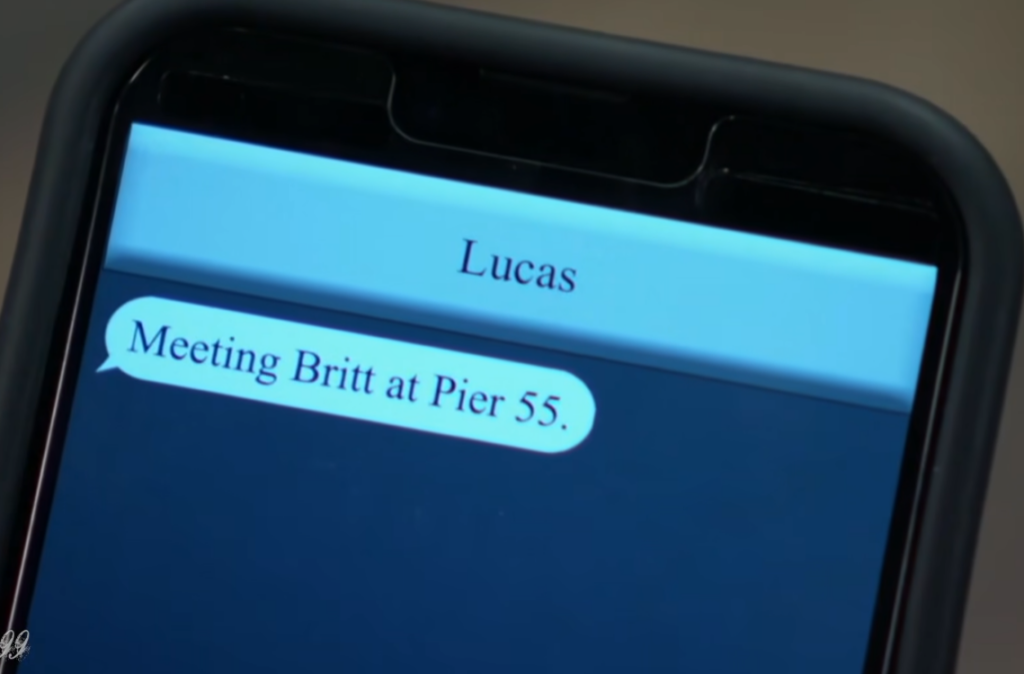
What makes this even more explosive is the fact that the phone is currently missing. That absence is no small detail — it is the mystery. The PCPD has not located it, and that alone has triggered a wave of suspicion and frustration among viewers. In a case where digital evidence should be the first thing secured, the failure to recover the phone raises immediate questions. Where is it? Who has it? And more importantly, who doesn’t want it found? The longer the phone stays missing, the more it feels like someone is actively controlling the truth rather than it simply being overlooked.
The dominant theory among fans is both simple and devastating: Cullum took the phone. This theory aligns almost too perfectly with what unfolded. Lucas sent messages to Marco about going to the pier. Cullum saw those messages. Cullum then went directly to the pier. That chain of events is not coincidence — it’s causation. If Cullum accessed Marco’s phone, then he didn’t just stumble into the situation, he was led there. And if he took the phone afterward, that suggests intent to erase or control the narrative. Whether the phone is hidden, destroyed, or still in his possession, the implication is clear — Cullum knew exactly what he was doing.

This leads directly to one of the most shocking and uncomfortable realizations in the entire storyline: Lucas may have unintentionally caused Marco’s death. Not through violence, but through information. His messages, meant for Marco, may have served as the exact breadcrumb trail Cullum needed. Fans are not ignoring this detail — they are amplifying it. The idea that a simple text could trigger a fatal chain reaction adds a tragic layer to Lucas’ role in the story. It reframes him from grieving partner to unwitting catalyst, and that shift carries serious emotional and narrative weight.
At the same time, the handling of the investigation has become a major point of criticism. The PCPD is being openly mocked for missing what seems obvious to viewers. Why haven’t they pulled phone records? Why aren’t they tracking the device through cell towers? Why hasn’t every piece of digital evidence been locked down? In a world where solving crimes often starts with data, the lack of urgency around the phone feels unrealistic — and fans are calling it out. The frustration isn’t just about the characters being slow; it’s about the story deliberately withholding logic to stretch tension.
Adding to the chaos is the growing pile of overlooked evidence. The knife, the broken vials, the gun — all of these elements exist, yet none have been fully explored. Instead, the narrative tension continues to orbit around the missing phone, reinforcing the idea that everything else is secondary. It creates a sense that the truth is not being uncovered piece by piece, but actively avoided. And that avoidance is what fuels the audience’s suspicion that there is a deeper layer still hidden beneath the surface.
Despite the lack of official confirmation, many fans are already convinced that Cullum is the killer. The phone theory only strengthens that belief. If he saw the messages, went to the pier, and possibly removed the phone, then his involvement becomes more than circumstantial — it becomes strategic. Some even speculate that he may not be acting alone, hinting at a larger force pulling the strings behind him. That possibility transforms the storyline from a single murder mystery into something far more complex and dangerous.
Ultimately, everything comes back to the phone. It is the one piece that connects every character, every decision, and every consequence. It holds the timeline, the motive, and possibly the final proof. And until it is found, the truth remains suspended — not unknown, but deliberately out of reach. When it finally surfaces, it won’t just answer questions. It will rewrite everything.