Something has fundamentally shifted in Willow Tait, and it’s no longer something she can mask. The composed, measured version of her that everyone trusted has completely disappeared. In its place is someone far more volatile—someone whose emotions are slipping past the point of control. Her tone is sharper, her reactions are faster, and her behavior carries an edge that wasn’t there before. This isn’t quiet anxiety or careful concern. It’s panic, unfiltered and rising to the surface in ways she can’t contain.
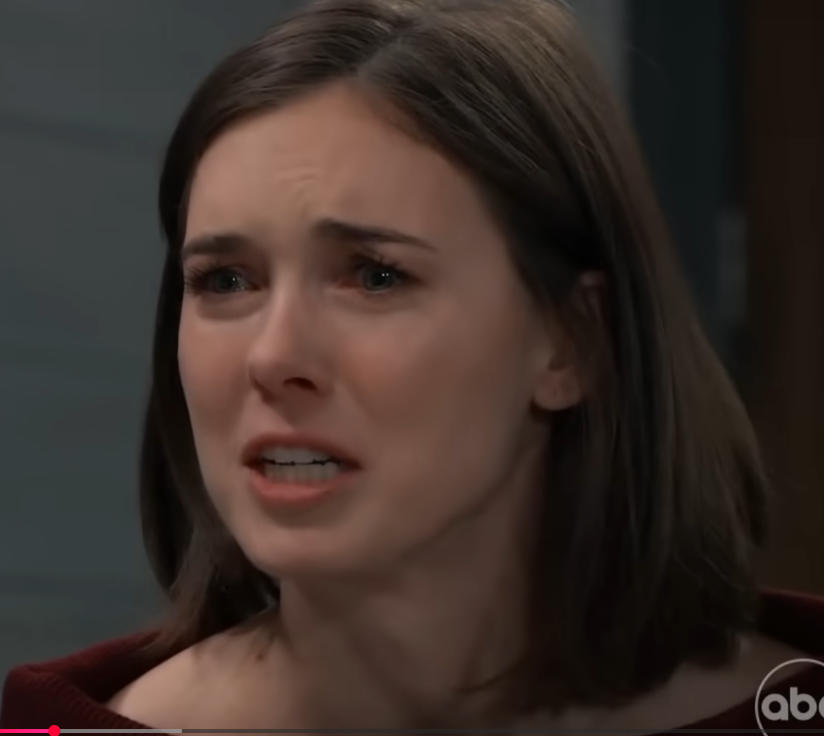
That instability becomes even more obvious in the way she approaches Harrison Chase. Willow isn’t simply trying to understand what’s happening—she’s pressing, repeating herself, and circling the same topics with increasing urgency. Her questions feel less like curiosity and more like desperation. She’s not trying to learn something new; she’s trying to assess how much damage has already been done. Every word she chooses feels calculated under pressure, not for clarity—but for containment.
At first, Chase doesn’t immediately question it. But slowly, something about Willow’s behavior begins to feel off. There’s a disconnect in the way she responds, as if she’s already anticipating answers before he even gives them. She’s asking about details that shouldn’t yet be on her radar, reacting too quickly, too precisely. And when Chase starts to probe—when he shifts from answering to questioning—Willow instinctively pulls back, redirecting the conversation. That’s when his perspective begins to change. Not because of what she says, but because of how she says it.
As the conversation lingers in his mind, Chase starts piecing things together. The timeline involving Drew Cain begins to unravel under closer scrutiny. Small moments that once seemed irrelevant now feel loaded with meaning. The way Willow frames her concerns, the specific details she zeroes in on, and the emotional spikes that don’t quite match the situation—all of it starts to form a pattern. What once looked like scattered behavior now aligns into something far more deliberate and unsettling.
This realization doesn’t hit him all at once. It builds gradually, almost against his will. Chase isn’t looking to doubt Willow—he wants to believe in her. But the more he replays their interaction, the harder it becomes to ignore what’s emerging. It begins to feel less like she’s worried about a potential outcome and more like she’s reacting to something that has already taken place. And that possibility—that she knows more than she should—reshapes everything he thought he understood.
What makes this even more dangerous is that Willow herself is accelerating the situation. Her panic isn’t contained anymore—it’s active, pushing things forward. Every attempt she makes to regain control only reveals more cracks. She chooses the wrong words, the wrong tone, and most critically, the wrong person to confide in. Chase was never supposed to see this side of her. But now that he has, the illusion she built is starting to collapse.
And now Chase is trapped in a difficult position. His instinct is to protect her, to stand by her the way he always has. But the growing realization in his mind tells a different story—one where he may have unknowingly contributed to something much darker. The idea that he’s been used, even unintentionally, begins to take hold. And with that realization comes a choice he can’t avoid.
At first, Chase doesn’t recognize his role in what’s happening. He believes he’s simply being supportive, offering reassurance and stability like he always does. But in reality, he becomes exactly what Willow needs—a source of information. Every answer he provides, every detail he confirms, feeds into her urgency. She doesn’t need to manipulate him deliberately. Her panic does it for her. The intensity in her voice pulls information out of him before he even questions why she’s asking.
Meanwhile, Willow continues to lose control. The harder she tries to stay ahead of the truth, the more she exposes it. She isn’t being cornered by evidence or forced into confession. Instead, she’s unraveling under pressure, revealing just enough for someone observant to notice. And now, Chase is paying attention in a way he wasn’t before.
In the end, the truth about what really happened to Drew may not come from a dramatic confrontation or a shocking reveal. It may emerge in a far quieter—and far more dangerous—way. Through repeated questions fueled by panic. Through answers given too easily. And through one slow, undeniable realization that changes everything.