Silence was supposed to be Lucas’s shield—but it’s quickly becoming the very thing that could destroy him. What he believed would protect the people around him is now tightening like a noose, turning him from a man caught in tragedy into the central suspect in Marco’s murder. The shift is chilling, and more importantly, it’s not accidental. Every accusation, every suspicious glance, feels strategically placed—as if Lucas is being guided, step by step, into taking the blame for something he didn’t do.

The most unsettling part is how subtle it all began. Cassius didn’t accuse Lucas outright—he didn’t need to. Instead, he planted a single, carefully chosen doubt. What seemed like a harmless observation was anything but. It was a calculated nudge, designed to redirect suspicion just enough to change the narrative. And once that doubt took hold, it spread fast. Fans have already started connecting the dots, pointing out how quickly the focus shifted toward Lucas despite glaring holes in the story. This isn’t coincidence. It’s manipulation—and Lucas is right at the center of it.
With that seed planted, Sidwell didn’t hesitate. He’s not a man who waits for confirmation or evidence. He reacts on instinct, and when he believes someone is responsible, he acts decisively—and often brutally. That’s what makes Lucas’s situation so dangerous. This isn’t just about suspicion anymore. It’s about survival. The moment Sidwell starts believing Lucas is guilty, the consequences won’t be measured or fair—they’ll be immediate and potentially deadly.
Viewers are already bracing for what comes next, and the predictions are dark. Many believe Lucas will soon be dragged into an interrogation, pushed to his limits, and forced into a corner where truth becomes secondary to staying alive. In that kind of pressure cooker, people don’t hold onto secrets—they break. And if Lucas is pushed far enough, the question isn’t whether he’ll talk. It’s what he’ll say when he does.
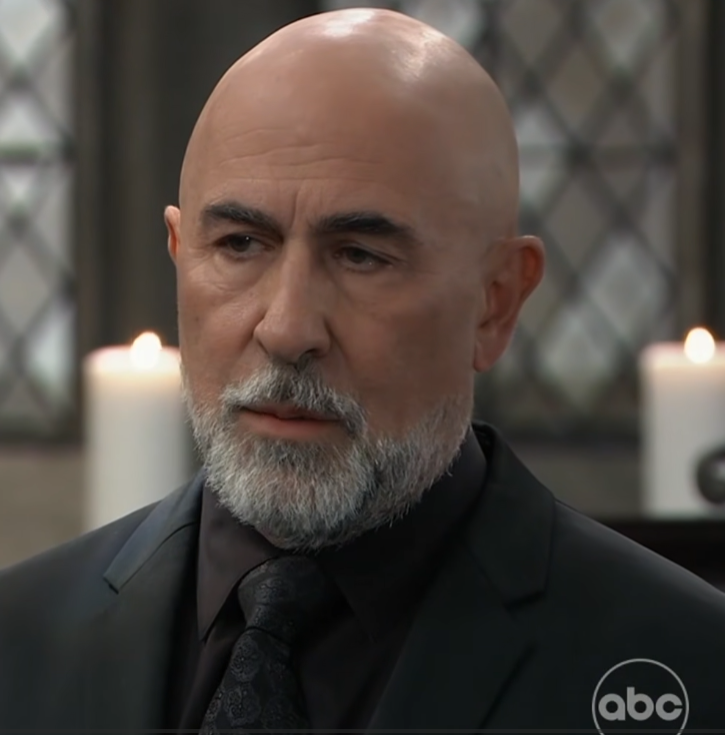
That’s where the real twist begins to take shape. Because if Lucas confesses—or even appears to—he might not be sealing his fate. He could be triggering something much bigger. A forced confession, especially under pressure, has the power to expose cracks in the entire narrative. It could reveal inconsistencies, contradictions, and ultimately point toward the person who orchestrated all of this from the shadows. In other words, Lucas’s downfall might become the very thing that exposes the truth.
And if that truth leads back to someone powerful, someone like Cassius or even deeper into Sidwell’s world, the fallout won’t be quiet. It will explode. What started as a single murder accusation could spiral into a full-scale conflict, pulling multiple players into a war that was never supposed to surface. Because if Lucas talks, he doesn’t just defend himself—he threatens to expose the entire game.
Right now, Lucas is standing at the edge of something far bigger than he realizes. He thinks he’s fighting to clear his name, but in reality, he’s being positioned as a trigger point. Every move against him, every ounce of pressure, is building toward a moment where the truth can no longer stay buried. And when that moment comes, it won’t just change his fate—it will rewrite the entire power structure behind Marco’s death.
Lucas isn’t just a suspect. He’s the setup. And if he breaks, the truth won’t just come out—it will detonate.