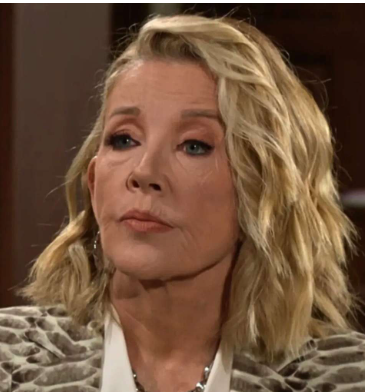
For weeks, everyone has assumed Nikki’s sudden blindness was nothing more than a devastating medical crisis. Doctors searched for answers, loved ones focused on helping her recover, and the conversation quickly shifted toward treatment rather than suspicion. But what if everyone has been asking the wrong question? What if Nikki didn’t simply lose her sight? What if someone deliberately made sure she would? While nothing has been confirmed on-screen, one theory raises a chilling possibility: the real weapon wasn’t a gun or a syringe—it was a simple cup of tea.
At first glance, tea seems harmless. Nikki drinks it as part of her daily routine, making it the last thing anyone would consider dangerous. That is exactly why this theory is so unsettling. If someone wanted to target Nikki without drawing immediate attention, poisoning a drink would be one of the safest and least suspicious methods imaginable. There would be no struggle, no visible attack, and no obvious crime scene. Instead, the symptoms could appear gradually, giving doctors every reason to believe they were dealing with a mysterious illness rather than a calculated act of sabotage.
The theory becomes even more intriguing when considering Nikki allegedly noticing that something about her tea seemed unusual. Imagine her mentioning that it tasted unusually bitter or different from what she normally drank. In the moment, such a complaint would sound insignificant. Many people would simply assume the tea had been brewed too long or that the recipe had changed. But in hindsight, a strange taste could become the very clue everyone ignored. If an unknown substance had been introduced into the drink, that bitterness might have been the first warning sign that something was terribly wrong.
Soap operas have relied on poison as a storytelling device for decades because it creates uncertainty. Victims rarely realize they are under attack until it is far too late. The symptoms often resemble legitimate medical conditions, sending investigators in the wrong direction while the real culprit quietly disappears into the background. If the same logic applied here, Nikki’s blindness would not have been the final objective. It would simply be the first stage of a much larger plan, one designed to leave her vulnerable while everyone else searched for explanations that never pointed toward murder.
Perhaps the most disturbing part of this theory has nothing to do with the tea itself. Instead, it centers on the person responsible for serving it. Imagine the household employee who regularly prepared Nikki’s drinks suddenly leaving shortly after her condition worsened. Was it an innocent coincidence? Or was that disappearance the missing piece nobody bothered to investigate? If someone with direct access to Nikki’s food and beverages vanished immediately after the tragedy, that timing alone would raise difficult questions. Even if the servant knew nothing about the poisoning, leaving so abruptly could make them appear connected to events they never intended to be part of.
Of course, this does not necessarily mean the servant was the mastermind. In fact, the theory becomes even stronger if they were merely another pawn. Someone with greater power, greater influence, and a personal reason to target Nikki could have manipulated an employee into unknowingly delivering the poisoned tea. The servant may have believed they were following ordinary instructions or preparing a routine beverage. If they later realized something terrible had happened, fear alone could explain why they disappeared before anyone started asking questions. In that version of events, the real villain never had to get their own hands dirty.
The biggest question then becomes motive. Why blind Nikki instead of eliminating her completely? The answer could be control rather than revenge. A blind Nikki would become increasingly dependent on the people around her. She would rely on others for information, transportation, medication, and protection. That vulnerability could make it easier for someone to manipulate family decisions, conceal important evidence, influence Victor, or quietly reshape the balance of power without Nikki realizing what was happening. If the goal was domination instead of murder, blindness becomes a frighteningly effective weapon.
There is another reason this theory continues to attract attention. It shifts the focus away from random enemies and toward someone Nikki already trusts. A stranger would struggle to gain regular access to her daily routine, but a familiar face would never raise suspicion. Someone inside her inner circle would understand exactly when she drinks tea, who prepares it, and how to ensure the plan unfolded without attracting attention. That possibility makes the mystery far more personal because betrayal always hurts more when it comes from someone close.
None of these ideas have been confirmed by the show, but they demonstrate how a seemingly ordinary detail could transform an entire storyline. A bitter cup of tea. An unexplained medical crisis. A household employee who disappears at exactly the wrong time. Independently, each clue means very little. Together, they create a theory that refuses to disappear.
What if Nikki’s blindness was never a tragic accident? What if the first victim wasn’t her eyesight, but everyone’s trust? And what if the person who vanished after serving that final cup of tea wasn’t the true villain at all—but the only witness who knew the conspiracy had already begun?
