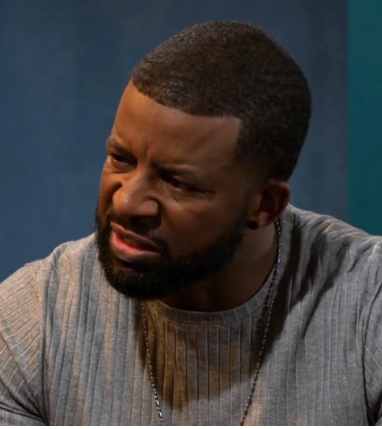
For weeks, the biggest question surrounding Randy has been simple: what exactly is the “cover” that spoilers suggest could soon be exposed? Most theories have focused on dramatic possibilities—a hidden crime, a secret partner, or an explosive confession waiting to happen. But what if the real danger is something much smaller? What if Randy’s carefully built cover doesn’t collapse because someone uncovers a shocking new secret, but because an old identity from Hayley’s past suddenly resurfaces? In a series where forgotten histories often become the most dangerous evidence, one overlooked alias may be enough to trigger a chain reaction neither of them can easily explain.
Hayley’s past has never been ordinary. Long before becoming part of the current storyline, she lived as a professional con artist and operated under more than one identity. Canon material confirms that she used multiple aliases, including one that has barely been mentioned on screen. More importantly, Randy was said to have helped provide those alternate identities during her earlier schemes. That detail has existed in the background for a long time, but until now it has seemed more like character history than an active mystery. With Randy’s cover now reportedly at risk, that forgotten piece of lore suddenly feels far more significant than ever before.
The most interesting part of this theory is that it doesn’t require a new villain, a surprise DNA twist, or an unbelievable conspiracy. Instead, it depends on something incredibly ordinary: paperwork. Television mysteries often condition viewers to expect dramatic evidence like hidden recordings or eyewitness testimony. Yet in the real world—and increasingly in modern soap storytelling—the smallest administrative details can unravel years of carefully protected secrets. A forgotten lease agreement, an outdated address, an old employment record, or even a signature that appears under a different name could become the first thread that investigators begin pulling.
That possibility makes the latest spoiler especially intriguing. The spoiler never explains what Randy’s “cover” actually refers to. It doesn’t say he is living under a fake identity. It doesn’t claim he forged official documents. It simply suggests that his cover may be exposed. That wording leaves plenty of room for interpretation. Perhaps Randy’s greatest vulnerability isn’t the identity he uses today. Perhaps it is the story he helped someone else create years ago. If an old alias connected to Hayley suddenly attracts attention, Randy could find himself answering uncomfortable questions without ever being accused of creating fake identification himself.
One forgotten alias could open an entire timeline that nobody expected to revisit. Imagine an investigator reopening records connected to a name that no one has thought about in years. A rental application could reveal an address. An address could connect to an old phone number. A phone number might lead to another witness who remembers a completely different version of events. None of these discoveries would prove criminal behavior on their own, but together they could force both Hayley and Randy to explain how those identities were created, why they existed, and who helped maintain them. Sometimes the most damaging evidence isn’t what it proves—it’s the questions it forces people to answer.
This is exactly why the theory remains grounded instead of becoming sensational. It does not assume Randy forged government documents or manufactured fake identification. There is no need to make those claims. The canon only establishes that Hayley used alternate identities and that Randy helped provide them. Those facts alone create enough room for an investigation if forgotten records begin resurfacing. Even if every explanation ultimately turns out to be legal, both characters could still face intense scrutiny simply because their shared history suddenly becomes relevant again.
Another reason this angle feels compelling is that Beyond the Gates consistently treats the past as a living force rather than a closed chapter. Old conversations return unexpectedly. Long-forgotten relationships reshape present conflicts. Minor details that once appeared meaningless often become the foundation for much larger revelations months later. Compared to that storytelling style, the rediscovery of an abandoned alias fits naturally within the show’s narrative structure. It doesn’t require rewriting history—it simply asks whether history has been waiting in plain sight all along.
Perhaps the most fascinating possibility is that Randy and Hayley may not even be hiding the same secret. Hayley could be trying to leave behind the life she once lived, while Randy may simply know more about that period than he ever intended to reveal. If investigators begin tracing old names, signatures, or historical records, the pressure wouldn’t come from proving a crime. It would come from explaining why those connections existed in the first place. Sometimes a mystery grows more dangerous not because someone is guilty, but because every answer creates two new questions.
If this theory proves even partially correct, Randy’s cover won’t fall because someone discovers who he is today. It will fall because someone finally remembers who Hayley used to be. And in a world built on carefully constructed stories, the smallest forgotten detail—a signature, an address, or a single abandoned alias—could become the one clue powerful enough to make the entire past impossible to hide.
