General Hospital had barely begun when everything suddenly changed. Just three minutes into the episode, ABC interrupted the broadcast for a Special Report concerning Dolly Parton, instantly pulling viewers out of Port Charles. The news itself was heartbreaking, and few would question Dolly’s extraordinary cultural importance. But among GH viewers, another question immediately exploded: Why did ABC need to stop the entire episode instead of simply putting a breaking-news banner across the screen?
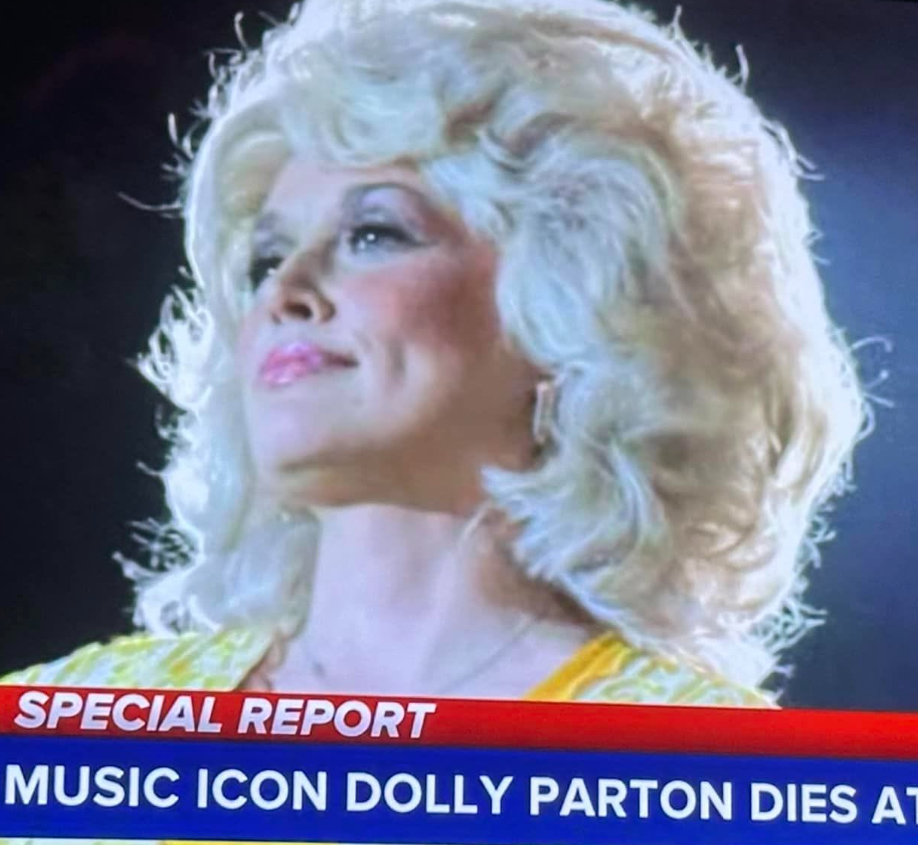
That question is where the real story begins. The interruption was not merely about three missing minutes of General Hospital. It highlighted the way television networks handle major breaking news involving an internationally recognized cultural figure. When a story is considered significant enough for immediate network coverage, the goal is no longer simply to inform viewers. The network wants to clearly signal that regular programming has been suspended because something exceptional has happened.
That distinction helps explain why a simple banner was not treated as enough. ABC had several less disruptive options available. A breaking-news crawl could have appeared at the bottom of the screen. The network could have used a split screen. A banner could have alerted viewers and directed them toward ABC News. Instead, General Hospital disappeared completely as the Special Report took control of the broadcast.
And that is the detail fueling the controversy. ABC wasn’t facing a choice between reporting the Dolly Parton news and ignoring it. The real choice was how dramatically the network should interrupt its normal programming to report it. For some GH viewers, that changes the entire argument. They respected Dolly and understood the importance of the news, but still believed the episode could have continued underneath a banner.
Other fans fiercely disagreed. To them, stopping General Hospital was exactly what ABC should have done. Dolly Parton was not simply another celebrity. She was an entertainment legend whose career and cultural influence stretched across generations. Some viewers argued that complaining about losing three minutes of a fictional daytime drama while the world was learning devastating real-life news completely missed the significance of the moment.
Then came another detail that weakened the argument against ABC: General Hospital was not permanently lost. In the streaming era, viewers have opportunities to revisit episodes and recover material interrupted during the original television broadcast. Several fans immediately pointed toward Hulu and other viewing options, essentially arguing that three interrupted minutes were inconvenient rather than irretrievable.
The debate also exposed a fascinating double standard among viewers. Some fans said they were perfectly comfortable with ABC interrupting GH for Dolly while being far less tolerant of other network interruptions, especially political coverage they did not consider urgent. That created a bigger question than anything happening in Port Charles: What exactly qualifies as important enough to stop a nationally broadcast television show?
Fans even brought up Michael Jackson’s death as a comparison. Major networks have historically suspended regular programming when globally recognized cultural figures die. From that perspective, ABC’s decision was not unprecedented at all. In fact, another possibility emerges: had ABC continued General Hospital while competing networks immediately switched to major breaking coverage, the network could have faced criticism for appearing slow or insensitive.
That leaves ABC in an almost impossible position. Interrupt the soap, and angry viewers demand to know why a banner wasn’t sufficient. Keep General Hospital running, and another audience could ask why the network failed to immediately acknowledge the loss of an American icon. What looked like a simple three-minute interruption suddenly becomes a much larger editorial decision.
Perhaps the biggest surprise, however, came from the GH fandom itself. The argument quickly stopped being about ABC and became fans battling fans. Some viewers blasted those complaining about the interruption, pointing out the irony that people routinely criticize episodes for being boring, only to become furious when three minutes disappear. Others insisted that respecting Dolly and questioning ABC’s broadcasting decision were not mutually exclusive.
And that is the real secret behind the interruption: the controversy was never simply Dolly Parton versus General Hospital. It was about ABC deciding that this moment required regular programming to completely surrender the screen rather than merely sharing it with a breaking-news alert.
Three minutes were enough to ignite the argument. But the question GH fans are still debating is much bigger: When major news breaks, who should decide when your favorite show must immediately disappear?
