GENERAL HOSPITAL SPOILER SPECULATION
Curtis Ashford thought he knew exactly who Desmond’s father was. But during the September 23 episode of General Hospital, one troubling admission suggested that the question of paternity was still haunting him. While holding his baby boy at Pentonville, Curtis expressed his fear that Desmond would grow up believing Isaiah Gannon was his father. It was supposed to be a touching family reunion. Instead, Curtis may have exposed the very fear that could destroy everything he believes about his son.
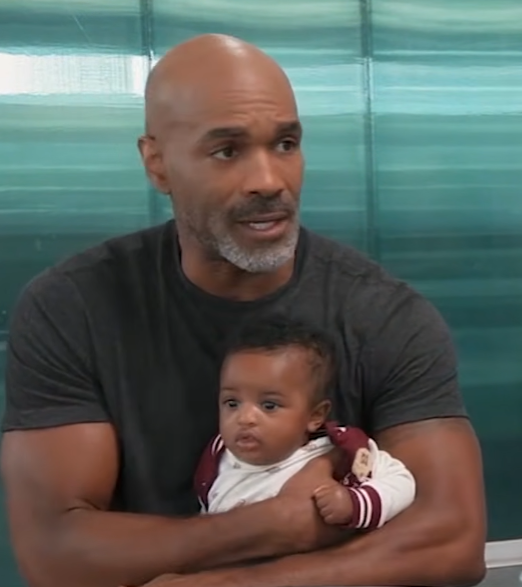
Portia had arranged the visit so Curtis could spend precious time with Desmond despite his imprisonment. The moment should have offered him comfort after weeks of uncertainty, separation, and family turmoil. Yet Isaiah’s name found its way into the conversation. Curtis could not stop thinking about another man occupying the place he desperately wanted to protect.
Portia reassured him that she would never exclude him from Desmond’s life. She wanted their family reunited when Curtis was released. But Curtis remained determined that there should be no confusion about who the baby’s father was. His insistence raises a provocative question: Was he simply afraid of losing his place in Desmond’s heart, or had he begun questioning something much more fundamental?
The answer could be buried in the paternity test that supposedly settled everything months earlier. In February, Portia arranged testing to determine whether Curtis or Isaiah was Desmond’s biological father. Isaiah provided a sample, Britt delivered the results, and Portia announced that Curtis was the father. Curtis celebrated the news, while Isaiah faced the disappointment of learning the baby was not his.
That result should have ended the uncertainty. Instead, Curtis’s September 23 admission gives the old storyline a disturbing new meaning. What if the man who keeps insisting Desmond is his son has privately begun wondering whether the original DNA result was wrong?
Curtis has already experienced the emotional consequences of a complicated paternity revelation. When testing established that he was Trina’s biological father, Marcus Taggert did not suddenly disappear from her life. Taggert had raised Trina, loved her, and remained an essential part of her identity. Curtis had to accept that sharing DNA with a child did not automatically erase the father who had been there first.
Now that painful history could return with the roles reversed. Curtis fears Isaiah becoming the man Desmond recognizes as his father. But imagine discovering that Isaiah is not merely a potential father figure. Imagine learning that Isaiah is the biological father Curtis believed he had already ruled out.
Their rivalry makes the possibility even more explosive. During Curtis’s trial, Isaiah’s belief that he could be a better father became part of the conflict between them. Curtis felt threatened by Isaiah’s presence in Portia’s life, and his imprisonment has only intensified that insecurity. Every day Curtis spends away from Desmond gives Isaiah another opportunity to build the family connection Curtis cannot currently provide.
Yet the most devastating twist would not come from Isaiah winning Portia’s affection or spending more time with the baby. It would come from an independent DNA test delivering an answer Curtis never expected to see.
Picture Curtis quietly requesting a second test after his release, determined to silence the doubts he has refused to discuss. He expects confirmation that Desmond is his biological son. Instead, the results identify Isaiah Gannon as the father.
Suddenly, every reassurance Portia offered at Pentonville would take on a different meaning. Curtis would remember how desperately he insisted that Desmond was his son, only to discover that the truth was far more complicated.
A contradictory result would also reopen questions about the original hospital records. Was there an error involving the samples? Did someone interfere with the testing process? Or did a person close to the Ashford family conceal information because they believed keeping Curtis and Portia together was worth the deception?
Aunt Stella could become part of that investigation if Curtis begins questioning who had access to the original results. Her desire to see the family reunited would provide an emotionally complicated possibility, although nothing has established that she actually altered the test. The mystery would need evidence, not merely suspicion, before anyone could be accused.
For Portia, the revelation would threaten the fragile understanding she had finally reached with Curtis. For Isaiah, it would mean discovering that the son he believed was another man’s child had been his all along.
But Curtis would face the cruelest realization. The little boy he held so lovingly at Pentonville would still be the same child. His feelings would not disappear because of a laboratory report. What would disappear is the certainty he clung to when he insisted Isaiah could never take his place.
Curtis was afraid Desmond would grow up believing Isaiah was his father. The real nightmare would be discovering that Desmond had been growing up believing Curtis was his biological father instead.
And if that DNA bombshell finally explodes, Curtis’s September 23 admission will sound less like ordinary jealousy—and more like the first warning of a family secret he was never prepared to uncover.
