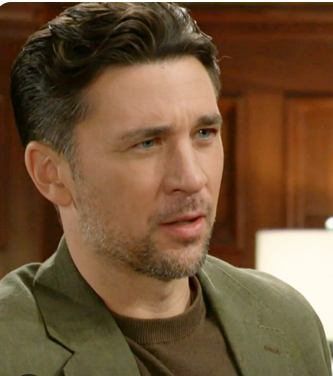
Cane thought he was putting Phyllis on the defensive when he demanded to know why she wanted his Genoa City properties. Instead, their confrontation may have dragged one of his own most suspicious moves back into the spotlight. Phyllis pointed out something that suddenly looks far more important than a simple real-estate transaction: those properties should have been part of Arabesque, but Cane transferred them into his own name shortly before the devastating AI attack.
That timing changes everything. Cane didn’t merely hold onto a few buildings after Arabesque fell apart. He apparently separated strategically valuable assets from the company before the crisis that would eventually threaten everything he had built. Now that Phyllis controls Arabesque and wants those properties returned to its orbit, the obvious question isn’t only what she plans to do with them. It’s why Cane protected them in the first place.
Cane immediately became suspicious when Phyllis approached him about buying the properties. He wanted her real endgame, and Phyllis wasn’t interested in giving it to him. She argued that the holdings belonged with Arabesque and suggested Cane no longer needed them now that his attention had shifted elsewhere. But Cane knew those buildings had once served a much bigger purpose.
They were connected to the blueprint he created when he was operating as Aristotle Dumas and plotting a much larger power play in Genoa City. Cane had accumulated strategic holdings while considering moves against some of the city’s biggest corporate players. That history makes the pre-AI transfer impossible to dismiss as meaningless bookkeeping.
There is still no proof that Cane knew the AI attack was coming. That distinction matters. But Phyllis bringing up the timing now gives Y&R a perfect reason to revisit what happened behind the scenes. Did Cane simply make a smart financial decision before disaster struck, or was he protecting the pieces of his empire he considered too valuable to leave exposed?
Phyllis may be asking herself the same question.
Her sudden determination to acquire the entire group of properties suggests she sees something Cane doesn’t want to surrender easily. She has already rebuilt her position from the wreckage of the old corporate war. Arabesque is hers, and she clearly doesn’t intend to treat Victor’s so-called fixer-upper like a consolation prize. If Cane removed the most strategically useful pieces before the company was attacked, then Phyllis may have discovered exactly what Arabesque is still missing.
That would also explain why Cane refuses to simply name a price. He understands what those assets once represented because he designed the original strategy around them. Selling them to Phyllis could give her more than valuable real estate. It could give her the infrastructure to resurrect an abandoned plan.
And Cane may already suspect that’s exactly what she’s doing.
When he confronted Phyllis about potentially continuing the Genoa City takeover strategy he abandoned, she didn’t rush to deny it. Her evasiveness only deepened his suspicions. That makes his pre-AI property transfer even more important because Phyllis isn’t randomly shopping for buildings. She is specifically pursuing pieces Cane once considered valuable enough to separate from Arabesque.
Nick may think Cane is the danger in this equation, but Cane delivered a chilling counterargument: Phyllis is the predator everyone should be watching.
Perhaps he understands her better than Nick realizes.
The biggest mystery now isn’t whether Phyllis wants to expand Arabesque. She obviously does. The real mystery is what she has recognized in Cane’s old holdings — and why Cane made sure those particular pieces were safely outside Arabesque before the AI disaster changed everything.
Phyllis may believe she just found the missing pieces of her future empire.
But she could also have uncovered a clue to one of Cane’s oldest secrets.
