Drew Cain may have believed fifteen missing minutes were enough to erase his connection to Jack Brennan, but General Hospital could be setting up a devastating reversal. The security blackout Drew deliberately created at the Metro Court gave him the perfect window to search Brennan’s room without cameras watching. What Drew may not have considered is what happened the instant those cameras came back online — because the footage after the blackout could be far more dangerous than the footage he erased.
Drew’s original plan was calculated. He planted a virus on Carly’s computer that temporarily knocked out the Metro Court security cameras, giving him time to get into Brennan’s room and search for whatever Jack was hiding. Meanwhile, Ava kept Brennan occupied downstairs. The blackout was supposed to create a clean, invisible gap in the hotel’s surveillance system, allowing Drew to move without leaving a visual trail.
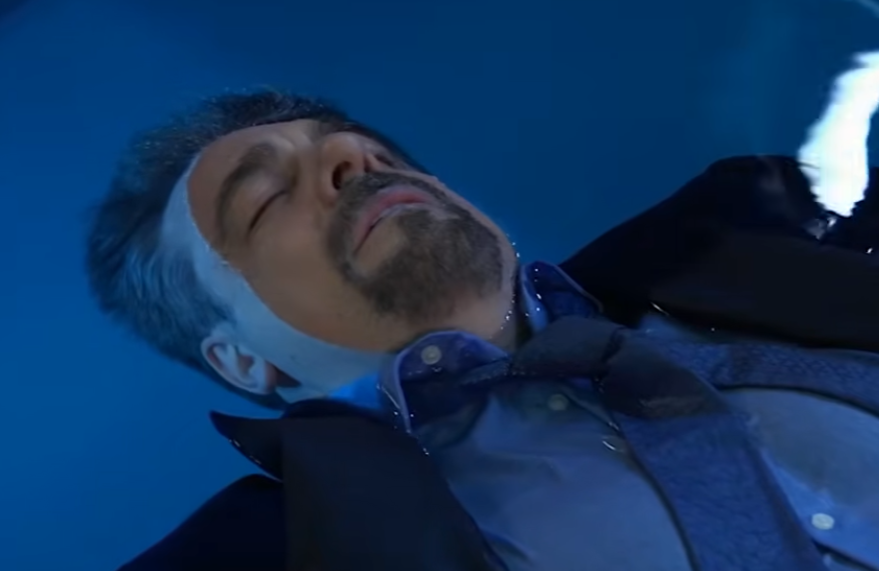
But the plan exploded when Brennan ended up dead. Drew and Ava suddenly had a much bigger problem than an illegal search. Brennan’s body had to disappear, and the pair ultimately transported him away from the Metro Court and buried him on protected land near the Quartermaine estate. Ava worried that authorities would eventually come looking because she had been seen with Brennan, while Drew counted on Brennan’s long list of enemies to muddy the investigation.
That is exactly why the camera blackout could become Drew’s worst mistake. A fifteen-minute outage does not erase an entire night. Unless Drew somehow disabled every camera permanently, surveillance would have resumed. Investigators may eventually stop asking only what happened during the missing fifteen minutes and start examining what appeared on camera immediately afterward.
That could expose a trail Drew and Ava never expected anyone to reconstruct.
Did a camera capture Drew emerging from an area he had no legitimate reason to enter? Was Ava recorded moving through the hotel at a time that contradicts the story she later gave? Did either of them appear with hotel equipment, towels, a cart, or anything else connected to moving Brennan? Even an apparently meaningless image could become explosive once investigators know exactly what time Brennan disappeared.
The danger becomes even greater because Drew and Ava later tried to establish an alibi. After burying Brennan, they returned to the Metro Court and sat together, with Drew covering for why they had been spending time with each other. If investigators recover surveillance showing their movements before and after that supposed alibi, the timeline itself could become the evidence that destroys them.
There is another problem Drew cannot easily explain away: he created the blackout in the first place. Once investigators discover that the outage was deliberate rather than an innocent technical failure, the fifteen-minute gap stops looking like missing evidence and starts looking like evidence of its own. Why would someone intentionally blind the Metro Court security system at precisely the time Brennan became the center of a deadly mystery?
That question could lead investigators directly back to Drew.
The fan discussion has already focused on the same overlooked vulnerability. Viewers have specifically remembered that Drew arranged for the cameras to go down so he could search Brennan’s room, while questioning what happened once the surveillance system returned. That distinction matters because Drew only controlled the blackout. He did not necessarily control everything recorded after it ended.
Ava could become the weakest link if the timeline begins collapsing. She and Drew were already nervous while disposing of Brennan’s body, and their burial was hardly flawless. They chose a relatively shallow grave, fled when they heard Outback approaching, and nearly had their hiding place discovered almost immediately. Their cover-up has depended less on perfect planning than on nobody putting all the pieces together.
And those pieces are multiplying.
The blackout. Drew’s secret search. Ava distracting Brennan. Brennan turning up dead. Drew and Ava moving his body. The hidden grave. Their later attempt to create an alibi. None of those details alone necessarily reveals the entire truth, but placed on one timeline, they could tell investigators exactly where to look next.
That would be the perfect General Hospital irony. Drew created fifteen minutes of darkness because he believed cameras were his greatest threat. Instead, those missing fifteen minutes could become the giant red flag that forces someone to examine every second immediately before and after them.
Drew may have successfully erased the moment he wanted hidden.
But if the cameras caught what happened when the lights came back on, he may have accidentally preserved the evidence that brings his entire scheme with Ava crashing down.
