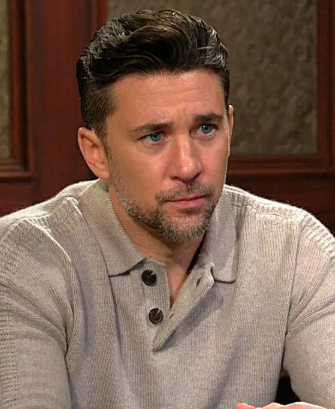
The Young and the Restless could bring one of the Chancellor family’s most notorious identity scandals back into the spotlight just as Jill Abbott’s health crisis forces Billy Abbott and Cane Ashby into an uneasy reunion.
The key would not be another random claimant announcing a shocking family connection. It would be a document tied to the original Phillip Chancellor III deception, a scandal that once changed Cane’s life and the Chancellor family’s understanding of its own history.
What if a long-forgotten paternity record became important during a new dispute over Chancellor inheritance rights?
The implications could reach far beyond Cane’s reputation.
Years ago, Cane entered Genoa City’s orbit while presenting himself as Phillip Chancellor III. The deception eventually unraveled, revealing that the real Phillip was alive and that Cane was not the person he had claimed to be.
That history left complicated emotional consequences for Jill, Katherine Chancellor, and the extended family.
Cane eventually built his own life, but the Phillip deception remains one of the defining controversies of his past.
Now Jill’s hospitalization has placed Cane and Billy in the same city, both concerned about a woman whose decisions have shaped their lives.
Billy wants a chance to repair his relationship with his mother. Cane, meanwhile, has been reflecting on his own late father, Colin Atkinson, and the importance of reconciliation before death makes it impossible.
Those parallel experiences could become the foundation for a major Chancellor story.
Imagine Jill’s legal representatives reviewing older trust documents while she recovers. One document refers to a paternity verification performed during the period when Cane’s identity was disputed.
The record itself might be authentic, but the legal significance attached to it could be unclear.
Perhaps a trust amendment relied on an outdated identification, or a beneficiary designation was never corrected after the real Phillip’s identity became known.
Such a discrepancy would not establish that Cane was secretly Phillip or that Billy’s parentage had changed.
Instead, it could raise a much more plausible question: did a legal decision made during the deception continue to affect the family’s property rights long after the truth emerged?
Cane would be horrified.
He has spent years trying to move beyond the consequences of assuming another man’s identity. Discovering that the deception still influences a Chancellor trust could make him feel as though his past has finally caught up with him.
Billy would see the situation differently.
He might suspect that Cane stands to benefit from a mistake that should have been corrected long ago.
The possibility of losing control over a valuable family asset could reopen every resentment Billy has carried toward Cane and Jill.
The situation would become even more volatile if Jill had known about the discrepancy but chosen not to address it.
Why would she leave such an issue unresolved?
Was she trying to protect someone? Did she believe the legal risk was insignificant? Or did she intentionally preserve an arrangement because she wanted Cane to retain a place in the family’s future?
Those questions could threaten Billy’s hopes of reconciliation.
He has returned to London fearing that he might lose his mother. Discovering that she made a major decision without telling him could leave him feeling betrayed at the very moment he wants to forgive her.
Cane might also face an impossible choice.
If the old documents appeared to grant him rights he never expected, would he pursue them? Or would he reject any benefit connected to the identity deception that once harmed the family?
The real Phillip Chancellor III would be an essential part of any credible resolution.
A story revisiting his identity should acknowledge that the original deception was exposed and that his existence is not a new mystery.
His testimony or previously authenticated records could help establish whether the old trust was properly amended.
The final twist might involve Jill’s intentions rather than anyone’s DNA.
Perhaps she had planned to correct the problem, but her hospitalization interrupted the process. Alternatively, she may have deliberately left an arrangement in place to force Billy and Cane to cooperate.
Either outcome would create a difficult emotional conflict.
Billy could win a legal argument and still lose the opportunity to understand his mother. Cane could surrender a financial claim yet discover that Jill valued his place in the family more than he realized.
No newly discovered Phillip paternity record or disputed Chancellor trust has been confirmed. This is a speculative storyline rooted in Cane’s established identity scandal and Jill’s current health crisis.
If Y&R revived that history, the strongest bombshell would not be another claim that Cane is secretly Phillip.
It would be the revelation that a lie exposed years ago is still capable of determining the Chancellor family’s future.
