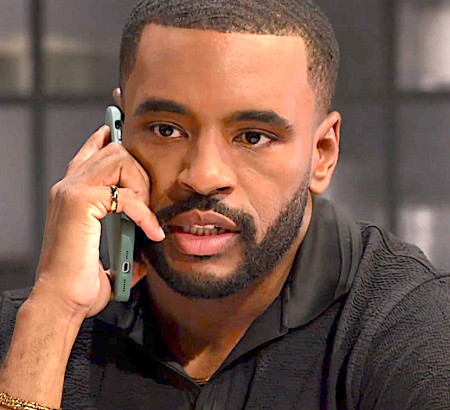
Everyone has been talking about the champagne bottle in Andre’s mysterious Paris photo. It was the first detail that caught attention, and it was clearly enough to shake Andre the moment he saw it. But what if everyone has been looking at the wrong clue? The most unsettling detail isn’t the bottle at all. It’s the person we never see. The recap shows a Paris photograph with a champagne bottle in plain view, yet the photographer is completely absent from the frame. That missing figure raises a much bigger question than the bottle itself. If someone deliberately stayed outside the camera’s view, could that unseen witness be the real secret Andre has spent years trying to leave behind?
At first glance, the champagne appears to be the obvious message. It seems like a reminder of a trip, a celebration, or perhaps a painful memory. But the composition of the photograph suggests something more deliberate. If the goal had simply been to prove Andre was once in Paris, there were countless ways to make the evidence clearer. Instead, the image reveals only enough to trigger Andre’s reaction while carefully hiding the identity of the person behind the camera. That choice feels intentional. The bottle may catch the eye, but the invisible photographer creates the mystery.
Many people immediately assume that whoever sent the photograph must also be blackmailing Andre. Yet the story has never confirmed that connection. In fact, the evidence allows for another possibility that may be even more intriguing. What if the person who took the photograph is not an enemy at all? They could simply be someone who witnessed an unforgettable moment, a longtime friend who promised to stay silent, or someone who has quietly protected a story Andre never wanted anyone else to hear. In that case, the photograph would not be a threat. It would be a reminder that the past has never truly disappeared.
That possibility leads to an even more compelling question. If someone has kept this photograph for years, why choose this exact moment to send it? If exposing Andre had always been the goal, the picture could have surfaced long ago. Instead, it remained hidden until now. Timing often matters more than evidence in soap opera storytelling, and this timing feels impossible to ignore. Something may have changed. Perhaps a forgotten chapter of Andre’s life is about to collide with the present. Perhaps someone connected to that Paris trip is returning. Or perhaps the person behind the camera has finally decided that remaining silent is no longer an option.
The champagne itself may also carry a very different meaning than many expect. Rather than serving as a weapon, it could simply be a private symbol shared between the people who were present that day. To everyone else, it is just an elegant bottle sitting in a photograph. To Andre, it may represent a conversation, a promise, or an event that has haunted him ever since. That would explain why his reaction was so immediate. He was not responding to the bottle itself. He was responding to everything it represented. Sometimes the smallest object can unlock memories that have been buried for years.
Perhaps the most fascinating possibility is that the missing photographer has never intended to reveal themselves until now. The photograph almost feels like the first move in a much larger game. Rather than exposing the truth all at once, it gently forces Andre to remember what happened before anyone else even realizes there is a mystery to solve. If that interpretation is correct, then the photograph is not the destination. It is merely the beginning. The real revelation may arrive only when the unseen witness finally steps into the story.
Soap operas frequently use objects as emotional triggers before introducing the people connected to them. Letters, jewelry, old photographs, and forgotten keepsakes often appear long before the individuals who gave them any meaning. The Paris photograph fits that storytelling pattern remarkably well. Instead of answering questions, it creates a carefully constructed absence. By refusing to show the photographer, the story leaves room for a future reveal without contradicting anything already shown. That missing face may prove to be the most important clue of all.
Of course, there is currently no evidence identifying the photographer. Nothing confirms their gender, their relationship with Andre, or their motives. They could be a witness, a former companion, or simply someone who happened to preserve an important memory. What matters is not who they are, but why the photograph appeared now. The delayed timing is what transforms an ordinary keepsake into a mystery that could reshape Andre’s entire storyline.
In the end, the champagne bottle may never have been the real message. It may have been nothing more than the key that unlocked Andre’s memory. The true secret could belong to the person standing just outside the frame—the only individual who knows exactly what happened in Paris and the only one capable of proving it. If that unseen witness finally decides to step forward, Andre’s past may not simply return. It could completely redefine everything believed about him until now.
