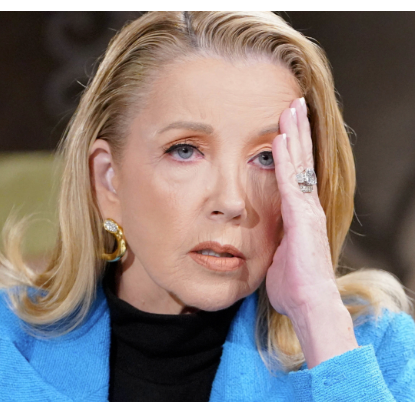
When Nikki Newman finally opened her eyes and regained her vision, it looked as though the nightmare had ended. But what if that wasn’t the real story at all? What if the most important clue had nothing to do with Nikki’s temporary blindness, and everything to do with a single nursery rhyme that refused to stop playing? During the July 28 episode, The Young and the Restless repeatedly used “Three Blind Mice” as the soundtrack to Nikki’s nightmare. At first glance, it seemed like nothing more than an unsettling horror device. Yet the more closely you examine the sequence, the harder it becomes to believe that this particular song was chosen by accident.
The most revealing detail isn’t that the song appears once. It’s that the writers deliberately make it impossible to ignore. Nikki hears “Three Blind Mice” from the piano, then again later, and eventually even from her own phone. The melody follows her through the nightmare like an invisible presence, becoming the one sound that consistently fuels her fear before she suddenly awakens with her eyesight restored. If the production team simply wanted a creepy atmosphere, they had endless options available. A broken music box, distorted violin notes, whispering voices, or even silence could have achieved the same effect. Instead, they repeatedly returned to a nursery rhyme built around one unmistakable idea—blindness.
That creative decision may be the biggest clue in the entire episode.
The title “Three Blind Mice” immediately evokes an image of characters who cannot see what is happening around them. Whether viewers know the full nursery rhyme or not, the symbolism is impossible to miss. Blindness has always represented more than physical vision in storytelling. It often symbolizes denial, misplaced confidence, hidden truths, or the inability to recognize danger until it is too late. That makes the repeated use of this song especially intriguing because Nikki’s nightmare isn’t only about losing her eyesight. Throughout the sequence, she cannot identify who is inside the house. She cannot understand where the music is coming from. She cannot explain why her phone is playing the same melody instead of connecting her to another person. Every direction leads to confusion. She isn’t simply blind—she is completely unable to perceive the truth surrounding her.
That is where this production choice becomes much more interesting.
The nightmare appears to focus entirely on Nikki’s medical condition, but symbolism rarely stays confined to a single character. Television writers frequently use one person’s experience to reflect a much larger problem affecting an entire family or storyline. If that pattern applies here, Nikki’s blindness may only be the first layer of the message. The real question becomes whether the Newman family is suffering from a different kind of blindness altogether.
Victor Newman has always believed he can stay several moves ahead of everyone else. Victoria trusts her instincts even when they lead her into dangerous situations. Nick constantly tries to protect the people he loves, while Adam often believes he understands motives that remain hidden from everyone else. Each family member approaches problems with confidence, yet confidence is not the same as clarity. What if the recurring nursery rhyme is quietly suggesting that every member of the Newman family is overlooking the same threat? They may all be looking directly at danger without actually recognizing it.
That possibility becomes even stronger when considering how intentionally the nightmare was constructed. Nothing about the sequence feels random. The camera repeatedly returns to the mysterious source of the music. The melody shifts from the piano to the phone, almost as though the nightmare wants Nikki to understand that there is no escaping its message. Instead of functioning as ordinary background music, “Three Blind Mice” becomes an active participant in the scene. Production teams rarely repeat visual or audio motifs this many times unless they want the audience to remember them long after the episode ends. The nightmare fades away. Nikki regains her sight. But the melody remains stuck in the viewer’s mind.
That is exactly how symbolic storytelling works.
The most fascinating aspect of this theory is that the show never explains why this specific nursery rhyme was selected. No character comments on it. No dialogue provides an answer. No later scene reveals its meaning. That silence creates one of the largest interpretive gaps in the episode. Rather than closing the mystery, the writers leave it completely open, inviting viewers to search for significance in the production itself. Sometimes what a show chooses to emphasize says more than what the dialogue ever could.
Perhaps “Three Blind Mice” really was nothing more than an eerie sound effect designed to make Nikki’s nightmare more unsettling. That remains a perfectly reasonable explanation. But it is equally reasonable to notice that the writers could have selected almost any frightening piece of music, yet deliberately returned again and again to one nursery rhyme forever associated with blindness. That creative decision feels too specific to dismiss.
If this production clue is pointing toward something larger, then Nikki recovering her eyesight was never the true resolution of the nightmare. Instead, it may have marked the beginning of a much bigger warning. Nikki can see again, but the real danger may still be approaching unnoticed. And if the symbolism behind “Three Blind Mice” is intentional, the most vulnerable people in Genoa City may not be the ones who cannot see.
They may be the ones who believe they already can.
