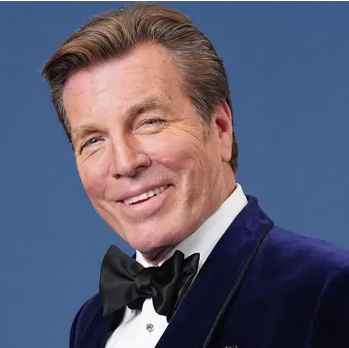
Billy Abbott may have just uncovered the one detail that could completely rewrite the history of Chancellor Industries. For years, Billy’s determination to claim Chancellor has looked personal, emotional, and even obsessive. But what if the real story is buried inside an old agreement signed decades ago? What if John Abbott did not simply help save Chancellor when it was in trouble? What if the agreement gave John — and eventually his heirs — a path to ownership that was triggered long before Billy ever entered the fight?
The key to this theory is the 20-year repayment deadline. The agreement reportedly contains a critical condition: the debt had to be repaid within twenty years. If that obligation was not satisfied, the ownership provision could potentially be triggered, giving John Abbott or his heirs a claim to the company. That changes everything. The question is no longer whether Billy wants Chancellor. The question becomes whether Chancellor ever fulfilled the original agreement in the first place.
That is exactly where Billy’s investigation could become explosive. Instead of searching through old family memorabilia, Billy could ask legal counsel to examine the financial history connected to the agreement. The first thing they would need to establish is simple: Was the debt actually repaid? If the records contain no cancelled payment, no formal release, no satisfaction of the debt, and no amended agreement extending or replacing the original terms, then Billy could have discovered something much bigger than an old business dispute.
The most suspicious detail would be a gap surrounding the moment the twenty-year deadline expired. Imagine Billy finding complete accounting records for years before and after the deadline, but nothing proving that the original obligation was ever satisfied. There is no final payment. There is no document confirming that Chancellor was released from the agreement. There is no amendment clearly eliminating John Abbott’s rights. That silence would not automatically prove ownership, but it would create a serious legal question — and potentially the most important question Billy has ever asked about Chancellor.
This could also explain why Billy has always described Chancellor as his birthright. Until now, that claim can easily sound like a personal belief inherited from his father. But an undiscovered contractual provision would give that belief a completely different foundation. Billy may not be trying to take something that belongs to Chancellor. He may be trying to determine whether his family already acquired rights to it decades ago.
That revelation would put Cane in an entirely different position. Cane could accuse Billy of trying to manipulate the past to justify taking control of Chancellor. Billy, however, could respond with documents rather than emotion. He would not have to argue that he deserves the company. He would only need to establish that the original agreement created an ownership mechanism — and that the obligation attached to that mechanism may never have been discharged.
The most dangerous part of this theory is the possibility that John Abbott himself may have believed the matter was settled without realizing that the legal terms were still active. If the twenty-year deadline passed without proper repayment or release, John may have possessed a claim that was never formally exercised. After his death, the question could then shift to whether those rights passed to his heirs and whether the Abbott estate still has legal standing to enforce them.
But there is one major distinction that cannot be ignored: the agreement does not automatically prove that Chancellor legally belongs to the Abbotts today. The existence of the 20-year clause may be canon, but several critical pieces remain unconfirmed. The debt may have been repaid through records Billy has not found. A release could exist somewhere else. The agreement could have been amended. The ownership provision could have limitations that prevent it from being enforced decades later. And the Abbott heirs’ current legal standing would still have to be established.
That uncertainty is precisely what makes the theory so powerful. Billy does not need to discover an immediate ownership certificate. He only needs to discover enough missing documentation to prove that the original transaction was never properly closed. One forgotten ledger could lead to an old contract. One missing payment could lead to an ownership clause. One overlooked clause could transform Billy’s entire battle for Chancellor.
And that would give the storyline a major payoff. Billy would no longer be fighting simply because he believes Chancellor belongs to his family. He could be uncovering evidence that his father’s agreement created a claim that was never properly extinguished.
The biggest twist would come when Billy finally confronts Cane with the evidence. Cane could insist that Billy is trying to steal Chancellor. Billy could answer with something far more damaging: he is not trying to take Chancellor — he is trying to find out whether Chancellor was ever legally released from John Abbott’s claim.
If that missing repayment record exists, everything changes.
Chancellor may not be Billy’s obsession anymore. It may be John Abbott’s unfinished business — and the Abbott family may have been entitled to something for decades without even knowing it.
