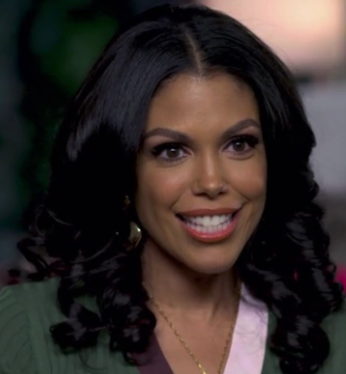
Beyond the Gates viewers know Karla Mosley as Dani Dupree, the fearless woman who can walk into a room, command attention and refuse to disappear when life turns against her. But long before Mosley became one of the most recognizable faces of the CBS soap, she was fighting a deeply private battle that few people watching her perform would ever have imagined. Behind the bright smile and infectious energy was a young woman struggling to hold herself together.
Mosley has spoken openly about her years-long battle with bulimia and disordered eating. Her experience was made even more isolating by something she once believed herself: that eating disorders did not happen to women who looked like her. As a Black woman, Mosley had absorbed the stereotype that eating disorders primarily affected wealthy, white teenage girls. It took her own painful experience to understand just how dangerously misleading that image could be.
Her struggle affected far more than what happened at mealtimes. Mosley recalled attending holidays and social gatherings without truly being mentally present because her thoughts were consumed by food, her body and what eating might mean the following day. Something that should have been ordinary became a constant source of anxiety. Food could provide comfort, but it could also become tied to the sadness and pressure she was trying desperately to release.
Then came one of the darkest periods of her life. In the early 2000s, Mosley was working on a children’s television program. Her job required exactly what viewers would expect: energy, laughter, movement and a smile capable of making children smile back. From the outside, she appeared to be living an exciting young performer’s dream.
But nighttime revealed a completely different reality.
Mosley later recalled that there was a period when she was purging every night. After spending her days laughing and entertaining children, she would find herself alone at night engaged in behavior she described as violent toward herself. She compared the contrast between those two lives to a “Dr. Jekyll, Mr. Hyde” existence. The cheerful performer audiences saw and the struggling young woman behind closed doors seemed almost impossible to reconcile.
Then devastating news pushed that struggle into an even sharper focus. Mosley lost an aunt who had been like a second mother to her. When she learned that her aunt had died, her immediate response was to run to the bathroom and purge. It was a painful illustration of how deeply her eating disorder had become connected to the way she processed grief, anxiety and emotions she did not know how else to release.
People around Mosley could see that something was wrong. Her colleagues knew about what she was going through and urged her to seek professional help. Eventually, she did. Mosley later credited treatment with helping save her life and allowing her to begin the difficult process of changing her relationship with food, her body and herself.
Her recovery also forced her to confront beliefs that had followed her since she was young. Mosley has written about growing up in a predominantly white environment and feeling pressure to make herself fit a particular image of beauty. As her body developed, she internalized the idea that she needed to control it to become more acceptable. Those feelings followed her into an industry where appearance can feel inseparable from opportunity.
Years later, Mosley made a profound decision about what mattered most. She had gone without her menstrual cycle for years and wanted to think about having children someday. She decided that if maintaining her health ever meant losing the acting and dancing career she loved, she would choose her health. It represented a dramatic reversal of the beliefs that had once controlled so much of her life.
That decision makes where Mosley is today especially meaningful. She eventually became a mother, continued her career and found another major daytime role as Dani Dupree on Beyond the Gates. The woman viewers now watch portray strength on television reached that point only after learning that strength did not mean silently enduring everything alone.
Mosley ultimately chose to tell her story publicly for a reason. She understood that somewhere, another person might be struggling while believing an eating disorder could not possibly happen to someone like them. By allowing people to see beyond the polished television image, she could challenge that misconception.
That may be the most powerful part of the story behind Dani’s fearless star. Karla Mosley once spent her days making other people smile while privately struggling through nights few of them could see. She eventually stopped hiding that chapter of her life — and transformed it into something capable of helping someone else feel seen.
