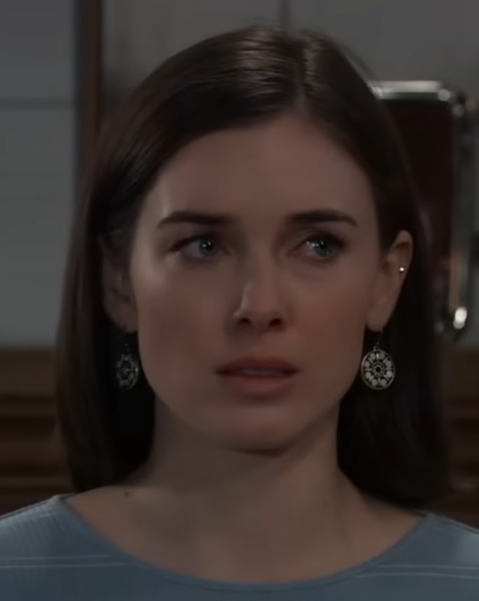
The moment that changed everything didn’t come from a single action—it came from a realization that hit fans all at once. What if Willow’s behavior isn’t just a reaction to pressure or trauma? What if it’s something deeper, something built into her from the very beginning? Viewers are now re-examining every move she’s made, connecting patterns across generations, and realizing this may not be random at all. It’s starting to look like a design—one that has been unfolding quietly beneath the surface.
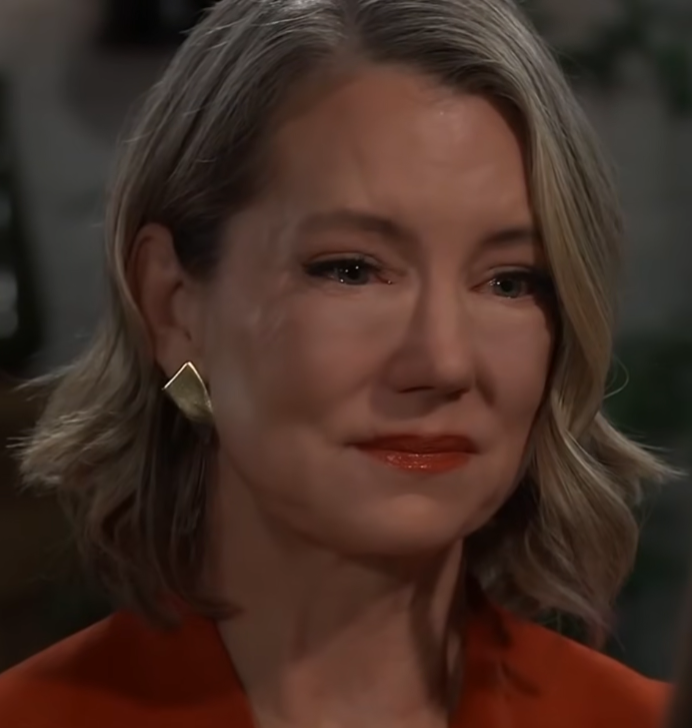
At the heart of this growing theory is Nina Reeves, a woman whose history has always blurred the line between vulnerability and manipulation. Nina’s choices have often been driven by emotion, but they’ve also crossed boundaries that can’t be ignored. Her need for love has led her to justify actions others would never dare defend. Now, fans are questioning whether Willow inherited more than just circumstances from her mother. Could she have inherited the same dangerous instincts, only refined?
The comparison to Nelle Benson only fuels the fire. Nelle was unpredictable, explosive, and openly destructive—a storm that everyone could see coming. Willow, on the other hand, operates differently. She doesn’t erupt; she calculates. She doesn’t lose control; she maintains it with chilling precision. That contrast is what makes her far more unsettling. If Nelle represented chaos in its rawest form, then Willow may represent something far more evolved—quiet, controlled, and far harder to stop.
This is where the fanbase begins to split. One side insists Willow is simply shaped by her past—a child torn from her roots, raised in damaging environments, and carrying emotional scars that never healed. But others argue that trauma alone doesn’t create this level of strategic thinking. Pain can explain instability, but it doesn’t always explain calculation. And that’s where the idea of inherited behavior starts to take hold.
Because if this pattern is rooted in genetics, then everything changes. Willow isn’t spiraling—she’s aligning with something that has always been part of her. The narrative shifts from a woman losing herself to someone discovering her true nature. And that possibility is far more disturbing. It suggests that what we’re seeing now isn’t a temporary breakdown, but a permanent transformation.
What makes it even more chilling is how Willow mirrors Nina—but without the hesitation that once defined her mother. Nina acted out of desperation, often blinded by emotion and regret. Willow strips that away entirely. Her decisions feel colder, more deliberate, and far less conflicted. She doesn’t react—she removes obstacles. That evolution from emotional chaos to strategic control signals something far more dangerous than anything Nina ever became.
And if this truly is a pattern embedded in her DNA, then it won’t stop here. Patterns escalate. Fans are already speculating that if Willow crossed one line to protect what she values, there’s nothing stopping her from crossing another. Anyone who threatens her position—whether it’s Trina, Kai, or anyone who gets too close to the truth—could become expendable. The logic is terrifying in its simplicity: if one move worked, why wouldn’t she repeat it?
That’s what puts Nina in an impossible position. This isn’t just about a daughter making reckless decisions anymore. It’s about watching that daughter transform into someone unrecognizable—or worse, someone inevitable. Nina is no longer just a concerned mother. She’s a woman forced to confront the possibility that the darkness she fears didn’t appear out of nowhere. It came from her.
And that realization could shatter everything. Because if Nina begins to see her own reflection in Willow—not the love she fought for, but the damage she left behind—then her next choice becomes a defining moment. Does she stand by her daughter and risk unleashing something even more destructive? Or does she take a stand against her, knowing it could destroy their bond forever? Either way, the truth is no longer avoidable—and neither are the consequences.